The 2025 holiday season broke records. U.S. shoppers spent $257.8 billion online between November 1 and December 31, up 6.8% from the year before. That revenue is real money worth celebrating. But it comes with a catch, and that catch is the holiday return policy.
The weeks after the holidays have a new nickname: the “hidden peak season.” Return rates that sit at 19-20% most of the year jump to 24.3% in December as gift recipients size up what they got. By early January, the surge hits 31.2%, and return requests climb 25-45% right after Christmas. Picture a merchant who sold $200,000 in November and December. That wave can send $40,000 to $60,000 in products back through the door, with a processing cost on every item.
The merchants who handle this well don’t just eat the cost. They prepare early, build a policy that nudges shoppers toward exchanges instead of refunds, and use the return portal to keep revenue rather than lose it. This guide walks through each move.
Contents
Holiday returns are trickier and pricier than the ones you see the rest of the year.
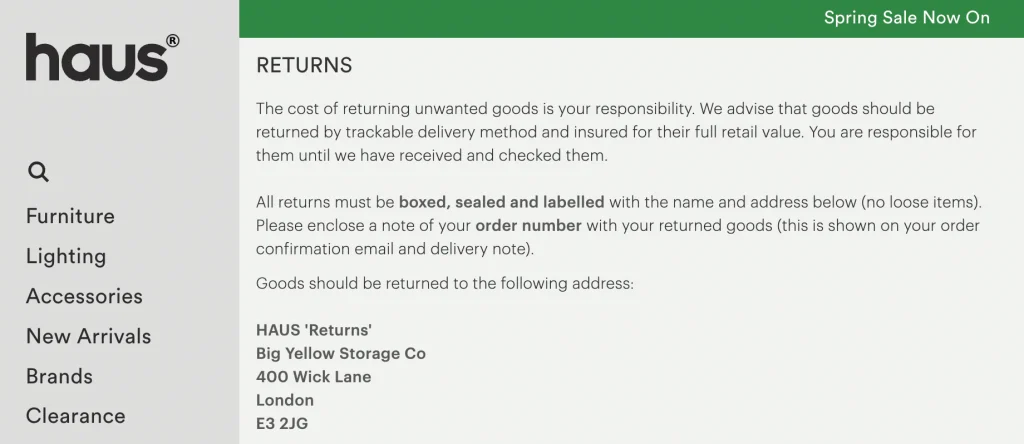
Gift orders create a buyer-recipient gap. Many holiday orders are gifts, so the person opening the box isn’t the one who picked it. The recipient may not know your store, may not have an account, and may not feel any reason to swap instead of just sending it back. These shoppers lean toward cash refunds unless the exchange path is smooth and gives them a reason to stay.
Long buying windows squeeze return timing. Someone who buys a gift in November often doesn’t find out if it fits until late December or early January. A standard 30-day window can close before the recipient even tries it. That’s the main reason extended return windows are now the norm for the season.
Volume buries manual work. Return requests rise 45% after Christmas, along with a 34% jump in support requests. Teams that run holiday sales on normal headcount walk into a January workload that is anything but normal. Without automation, you get slow refunds, long waits, and a support backlog.
A visible policy shapes whether people buy at all. 93% of shoppers check a store’s return policy before buying online, and 55% of U.S. holiday shoppers look for an extended holiday policy before they check out. A policy that’s hard to find or silent on gift returns costs you sales before the season even peaks.
Holiday returns cost more than the rest of the year for two reasons that stack up: volume is higher, and fewer items come back in sellable shape.
The average cost to process one return runs $28–$35 during the holidays once you add shipping, labor, and lost value. Only 48% of returned items can go back on the shelf at full price. The rest come back worn, opened, or missing packaging, so they get marked down or thrown out.
Then there’s return fraud, which clusters in the holiday window. Return fraud recently tripled to $76.5 billion in losses. Bracketing, where shoppers order several sizes planning to return all but one, is common during the holidays. For every $100 spent on a bracketing-heavy apparel order, merchants can expect to process $50-$75 in returns.
In the EU, a new rule makes this even more expensive if you’re not compliant. From June 19, 2026, any online store selling to EU consumers must provide a clearly visible “withdrawal button” that lets shoppers exercise their 14‑day right of withdrawal in a few clicks. Skip it, and the standard withdrawal window can extend to 12 months and 14 days on every EU order, with fines that reach up to 4% of annual turnover or €2 million, depending on the market.
A return policy isn’t just a legal page in your footer. It’s a sales and retention tool. Merchants who design it to build trust and cut friction beat the ones who copy a generic 30-day window.

The standard window is 30 days, but shopper expectations run more generously. Both Amazon and Walmart updated their 2025 holiday return policies to state that purchases made between November 1 (or Oct 1 for Walmart) and December 31, 2025, are eligible for return until January 31, 2026 . Top Shopify stores go to February 15 or 28 for extra confidence.
Longer windows do something that sounds backward: they lower your return rate. When customers feel no rush to send something back “just in case,” they take their time, use the product, and find reasons to keep it.
A policy customers can’t find might as well not exist. Point to it on:
Spell out the terms in plain words, like “All orders placed November 1 through December 31 can be returned until January 31.” Vague wording is one of the top reasons support tickets pile up in January.
Gift returns need their own rules, since the recipient is often a different person from the buyer. Set up a gift return path where recipients start a return using only the order number or a gift receipt, with no need for the buyer’s account login. That one change keeps gift recipients from giving up on an exchange.
The choice between an exchange and a refund is the biggest moment in holiday returns. A refund pushes revenue out of your business for good. An exchange keeps that revenue, can add more if the new item costs more, and turns a one-time sale into a real relationship.
The numbers show the size of the opportunity. In January 2025, Loop Returns processed 1.65 million returns worth $224.2 million across 3,626 merchants. Of that, about 31% stayed in the business through exchanges and other paths instead of cash refunds.
The simplest move with the biggest payoff is showing the exchange option before the refund option. People follow the path of least resistance. When exchange comes first and a refund takes an extra click, exchange rates go up without spending a cent on incentives.
A strong flow works like this:
Offering bonus store credit, a value higher than the cash refund, wins over undecided customers. Simple example: when someone returns a $50 item, offering $55 in store credit instead of $50 cash gives them a reason to stay.
The data backs it up. 68% of customers who get store credit buy again, compared to 45–50% after a cash refund. And they often spend more than the credit is worth.
The piece that makes this work at scale is simple: free shipping on exchanges, a small fee on cash refunds. When a cash return costs $4.95, but an exchange costs nothing, many customers pick the exchange because the math is obvious. The industry has already shifted this way. 72% of retailers now charge a fee on at least some returns (NRF/Happy Returns, 2025), typically mail-in, while keeping in-store returns free.
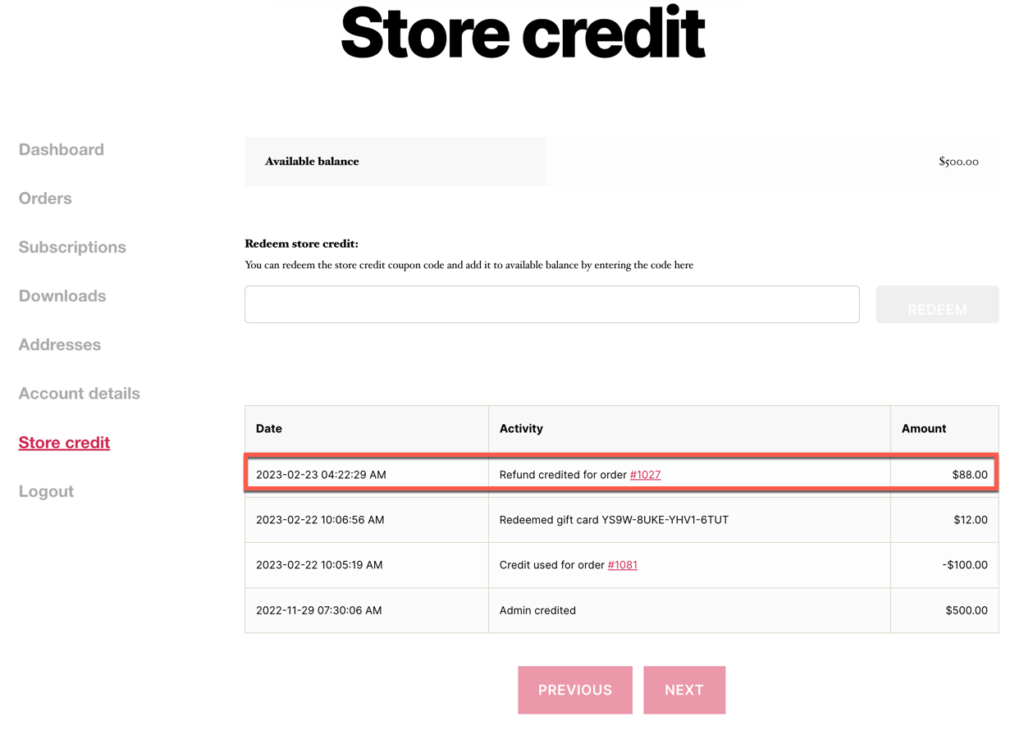
These three tools aren’t just a way to avoid cash refunds. They keep customers coming back, and they work best when each one is fast, visible, and easy to use.
Store credit keeps the customer’s money in your business and locks in a future sale. Issue it fast, ideally within 48 hours. Make it easy to apply at checkout, and pair it with a clear expiration date for a little urgency. One small fix that boosts use: show the credit as a dollar amount right in the cart, instead of making people dig into an account page.
Gift cards beat account credit on flexibility. Customers can share them or use them across visits. For holiday returns, where the buyer may want to hand the credit to the gift recipient, a gift card is more useful. On Shopify, you can set up automatic gift card issuance from the return portal, so it’s instant and needs zero manual work.
Discount codes on the return confirmation page hit one of the highest-attention moments after purchase. Adding a clear, time-limited code turns someone in a bad mood into an active shopper. Keep it short and warm: “Your return is being processed. As a thank-you, here’s 15% off your next order, good for 30 days.”
Manual processing was never built for January. A store that handles 20–30 returns a week in normal months can face 80–120 a week in early January. Without automation, that means backlogs, slow refunds, and a flood of “where’s my refund?” tickets.
A self-service returns portal fixes this at the root. Customers start, track, and finish a return without contacting support. They need only an order number and email, the portal makes a prepaid label automatically, and it sends updates at every stage: return received, inspection done, refund or exchange processed.
The case for automating is hard to argue with:
Every return that never happens beats even the best exchange. The pre-season work of lowering return rates pays off across the whole return wave.
Poor product presentation is the top driver of avoidable returns, blamed for about 34% of all return volume. During the holidays, when many shoppers buy items they’ve never touched, accurate content matters even more. The fixes that work:
Products with no clear size reference show return rates 45% higher than those with full measurements. These are fixable gaps, and closing them before the season pays off on every order.
Holiday shoppers buy for other people, often in a hurry, with less info than they’d use for themselves. Recommendation emails that point to fit guides, confirmation emails that show the return policy, and shipping emails with honest delivery dates all cut the “I didn’t know what I was getting” returns.
Return rates aren’t even. A 20% average often hides individual products running 40–50%. Pull last year’s return data by product and reason in October or November, then fix content or inventory before the rush. That keeps the same products from becoming the same headache again.
You’ve seen the five tips. Exchange-first flows, store credit, an automated portal, and fewer returns. The problem? Setting all that up by hand is a headache. You’d be building rules, printing labels one by one, and syncing every status back to Shopify.
Skip it, and the old problems return fast: cash refunds that drain revenue, slow approvals, and a flood of “where’s my refund?” tickets.
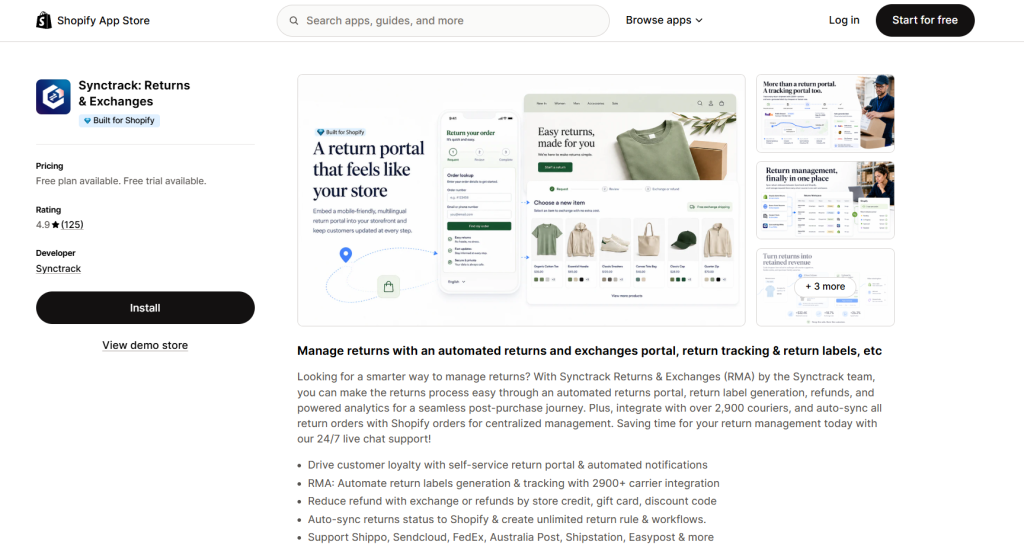
Synctrack Returns & Exchanges closes those gaps in one place. It’s a return management app built for Shopify that handles the whole post-purchase flow, so you get every tactic in this guide without the manual work. Here’s how it covers:
The result: fewer cash refunds, more revenue kept through exchanges, and a return process that runs without your team babysitting it. And if you sell into the EU, Synctrack also keeps you ahead of the new Withdrawal Button rule. Synctrack’s EU Withdrawal form feature adds that button and compliant flow to your store, without you having to wire it all together by hand.
You can start free (up to 5 returns a month), then scale up as you grow – $19.99, $49.99, or $149.99/month for bigger stores.
Heading into the holiday rush, that’s the difference between dreading January and profiting from it.
Start Writing
How you handle post-holiday returns is one of the biggest brand moments of the year. 92% of customers say they’ll buy again if returns are easy, and shoppers with good return experiences spend 57% more later. Flip it around, and 67% of shoppers refuse to buy again after a bad return experience.
So the holiday return season isn’t just a logistics problem. It’s a retention event. The merchants who build exchange-first flows, automate the portal, and communicate clearly turn their most expensive Q4 into one of their most profitable quarters. They recapture revenue, build loyalty, and head into the new year with a stronger customer base than they started with.