The holiday rush makes or breaks the year for most online stores. Shoppers spend more, expect faster delivery, and judge brands harshly when packages arrive late. Holiday fulfillment is the full process of preparing inventory, picking, packing, shipping, and handling returns during this peak window. Get it right and you protect your revenue. Get it wrong and one bad season can undo a year of growth.
This guide walks you through every step of holiday fulfillment, from planning and forecasting to delivery promises, returns, and the numbers to watch daily.
Holiday fulfillment covers everything that happens between a holiday order and a happy customer. That means stocking the right products in the right places, processing orders quickly, picking the right shipping service, and dealing with the flood of returns that follows the gifting season.
And the numbers are huge. U.S. holiday core retail sales hit $994.1 billion in 2024, with online and non-store sales jumping 8.6% to $296.7 billion, according to the NRF report. Adobe tracked $257.8 billion in U.S. online holiday spend in 2025, up 6.8% from the year before, with 25 days topping $4 billion in sales.
Customers are pickier, too. According to Narvar’s 2025 holiday survey, 53% of shoppers say estimated delivery dates affect which retailer they pick, and 56% say accurate dates make them more likely to buy. So holiday fulfillment isn’t just a back-office job anymore. It shapes whether someone finishes checkout or walks away.
Plan in July, not October. Most fulfillment experts suggest two to three months of lead time before peak, but stores that start sooner snag better carrier rates, lock in stock before shortages, and dodge panic decisions in late November.
Here’s a month-by-month calendar that works for most stores:
| Month | Focus |
| July | Review last year’s results, audit promo lessons, and set revenue targets |
| August | Build the demand forecast, segment SKUs, and place first purchase orders |
| September | Reserve inbound capacity, lock in carrier rates, refresh packaging |
| October | Test systems, train support staff, position inventory |
| November | Launch BFCM, monitor daily, message shoppers early |
| December | Hit shipping cutoffs, handle exceptions, and prepare for returns |
| January | Process returns, run the postmortem, plan next year |
The hard deadlines come from carriers. In 2025, USPS suggested send-by dates of December 17 to 20, depending on service. UPS listed December 22 for 2nd Day Air and December 23 for Next Day Air to make Christmas Day. Dates shift a bit every year, so pull the official carrier calendars in October and build your store cutoffs around them.
Forecasting is the biggest lever you have. Mess it up and you’ll either run out of bestsellers in early December or sit on unsold gift sets through January. Build the forecast in 3 layers.
Pull last year’s holiday sales by SKU, then strip out the noise. Adjust for stockouts that hid real demand, promos that puffed it up, and one-off events that won’t repeat. What’s left is a baseline you can trust.
Different SKUs need different methods. Sort yours into four groups:
Each group needs its own treatment. Evergreens run on simple averages. Seasonal items need bigger safety stock. New launches need judgment and small test runs before you scale.
A good forecast uses more than past sales. Add promo plans, ad spend, market trends, weather, and competitor pricing. Wishlists, back-in-stock signups, and pre-launch emails also give you early demand signals.
One trap to watch: a 2025 study on demand forecasting found that promo periods push planners toward overforecasting when they aim for very high service levels (source: sciencedirect.com). Fear of running out leads to buying too much. Keep your service-level goal separate from the demand signal, and ask whether last year’s promo really sold more units or just shifted timing.
Shipping is usually the highest single cost in holiday fulfillment, and it’s where margin slips away the fastest. Treat shipping like a portfolio, not a one-carrier choice.

Different orders fit different services. Light residential parcels are cheap through regional carriers or USPS. Oversized items often run better on UPS or FedEx Ground. Urgent gifts may need air in the final week before Christmas. Cross-border orders need carriers that handle customs well.
Assign each order type to the cheapest service that still hits the delivery promise.
Big carriers tack on demand surcharges during peak weeks, and they chip away at margin fast. UPS bumped its 2025 demand surcharge on Ground Residential and Ground Saver from $0.40 to $0.60 per package between late November and late December. Oversized parcels and additional handling get hit even harder.
Bake these costs into your prices before the season starts. Don’t eat them quietly in December.
Delivery dates matter more than ever. Narvar found that 57% of shoppers want shipping and return policies visible before they buy, and 88% would take slower delivery in exchange for free shipping.
Show estimated delivery dates on product pages and at checkout. Refresh them as carrier cutoffs get closer. The moment a service can’t promise Christmas delivery, swap it for the next-cheapest option that still can.

Most rate talks chase the wrong wins. Before pushing for a base-rate discount, check your accessorial charges (residential delivery, fuel surcharges, additional handling). Right-size your boxes to drop dimensional fees. Split volume across carriers so no single one becomes a choke point. These moves usually save more than a small base-rate cut.
Packaging and returns work as a pair. Smart packaging cuts damage and shipping cost. Smart returns keep revenue in your pocket and bring buyers back.
Match the box to the item. Too small and the product breaks. Too big and you pay to ship air, plus you may trigger dimensional weight fees. Add enough cushioning to keep things from shifting, seal with proper shipping tape, and peel off old labels from reused boxes (source: fedex.com).
For brand-led stores, packaging also doubles as marketing. Branded inserts and clean unboxing earn you social posts and repeat orders. Just keep weight and size in check.
Returns spike after every gifting season. NRF data shows retailers expect their holiday return rate to be 17% higher than their annual rate – meaning roughly 1 in 5 holiday orders may come back. shows retailers expect 17% of holiday sales to come back. Gift buyers need longer windows because the actual user may want to swap sizes or colors.
A solid holiday return policy covers:
Exchanges keep the revenue that refunds lose. Push them first whenever a buyer just needs a different size or color.
>>> Learn More: 11 Tips To Hassle-Free From Black Friday Returns
The cheapest return is the one that never happens. Most returns come from inaccurate descriptions, missing size guides, and weak photos. Before peak season, audit your top 50 SKUs and tighten every listing. Add size charts, short demo videos, and customer photos. Cleaner listings drop returns and lift conversion at the same time.
One of the biggest holiday calls is who actually picks, packs, and ships your orders. There are three main models, and each fits a different stage of business.
| Model | Best for | Strengths | Weaknesses |
| In-house | Small volume, custom products, control-heavy brands | Full control, no third-party fees | Hard to scale, capex-heavy, limited zones |
| 3PL | Growing brands, multichannel sellers, speed-focused stores | Variable cost, multiple warehouses, better rates | Less daily control, onboarding takes time |
| Hybrid | Brands with mixed order types or fast growth | Keeps custom work in-house, outsources overflow | More complex systems and inventory work |
For most growing merchants, hybrid works best in Q4. Keep your high-touch orders, subscription boxes, or local deliveries in-house. Route overflow and distant-zone orders through a 3PL with multiple warehouses. You hold control where it matters and add capacity where you need it.
Post-purchase communication is part of fulfillment performance. Narvar research shows two-thirds of shoppers feel anxious after clicking “buy,” and 74% had a late delivery in the past year. Silence makes that worse. Steady updates calm it down.
This is where a tracking tool earns its place. Many Shopify merchants run Synctrack Order Tracking to send shoppers branded tracking pages and automatic updates, so fewer buyers ask “where’s my order?” during peak season.
Black Friday to Christmas Eve brings the biggest spike in tracking questions all year. Shoppers refresh their inboxes, ping your support team, and worry their gifts won’t show up in time. For many stores, those tickets pile up faster than the team can answer.
Synctrack Order Tracking takes that load off your plate. It keeps buyers updated inside your store, cuts support tickets, and turns the post-purchase wait into a brand moment instead of a black hole.
Here’s how it helps during peak season:
Synctrack builds a customizable tracking page where customers see shipment updates in one spot. Instead of leaving for a generic carrier site, they stay inside your brand. That trust matters most during the anxious holiday wait, and the page also gives you room to show related products or seasonal promos.
Synctrack pulls live tracking data so buyers always see the current status. When a carrier updates a package, the tracking page updates too. Shoppers stop emailing support for status updates because the answer is already there.
Synctrack fires off updates by email without manual work. Order confirmed, shipped, out for delivery, delivered. Every step triggers a note. This kind of steady contact eases shopper anxiety before it turns into a support ticket.
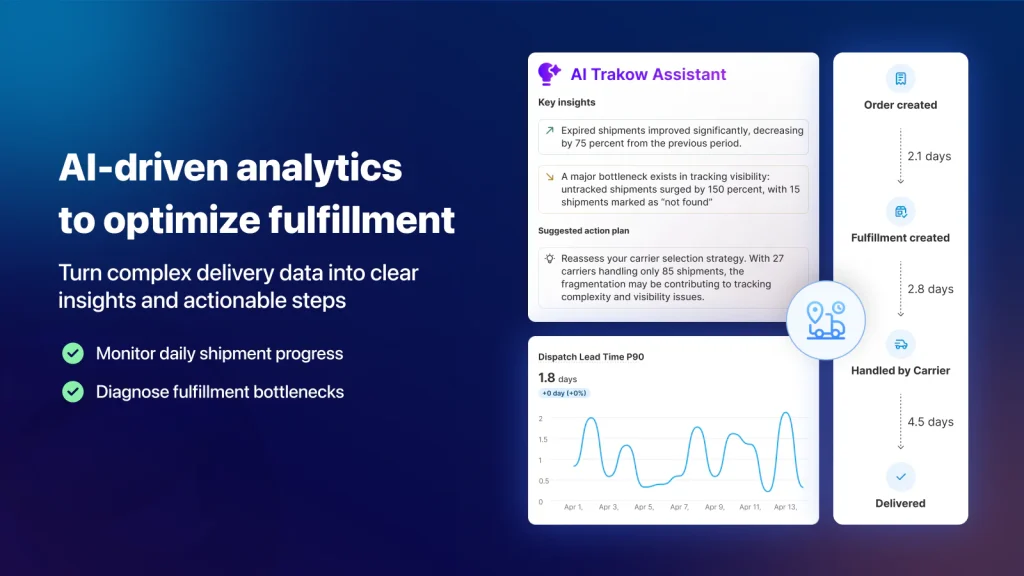
Synctrack’s AI checks shipment performance, delivery delays, and tracking data to fine-tune your delivery estimates and flag problem lanes early. During peak, that means you spot a slow carrier or backed-up route before it hits customer reviews. You can change shipping promises or switch services while there’s still time.
Synctrack finds the right carrier for each tracking number on its own. No manual entry, no wrong mappings, no broken tracking links. With 2880+ carriers supported worldwide (DHL, UPS, USPS, YunExpress, FedEx, and more), most Shopify stores find their carriers already covered.
Synctrack plugs into Shopify and syncs orders automatically. It also connects to other tools in your stack, so tracking data flows where it needs to go without manual exports. That alone saves hours during the busiest weeks.
The big payoff is on the support side. WISMO tickets usually make up the biggest chunk of holiday support work. With a branded tracking page, live updates, and automatic notifications, Synctrack removes the reason most of those tickets exist. Your support team can focus on real problems instead of repeating “your package is on its way.”
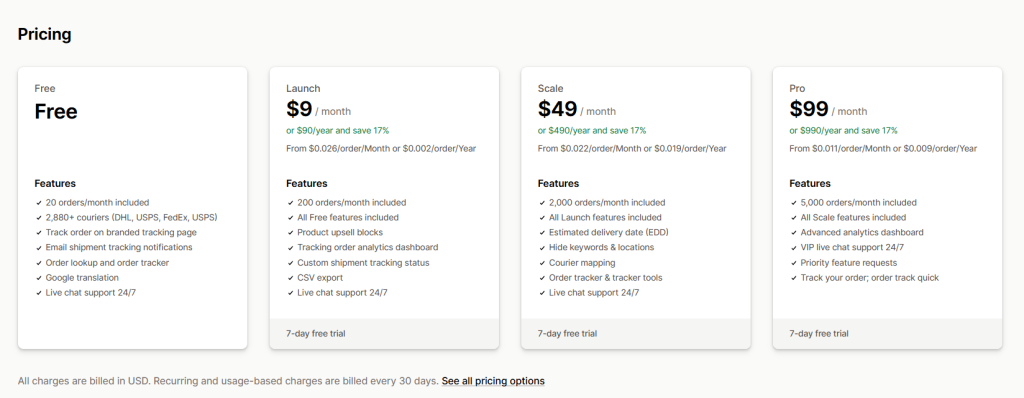
Synctrack offers a Free plan with basic tracking for up to 20 orders a month, a Launch plan at $9/month with analytics, SMS notifications, and upsell features, and Scale/Pro plans with deeper analytics, higher limits, and priority support. Most stores can start free, see the value before peak, and move up as holiday volume builds.
Yes. Most strong brands stretch windows for orders placed mid-November through late December, often through mid-January. State the extension on product pages and order confirmations so shoppers don’t have to dig.
Send proactive shipping updates at every step, show tracking on a branded page inside your store, and notify shoppers right away when something slips. Tools like Synctrack Order Tracking handle all of this automatically for Shopify merchants and can cut WISMO tickets sharply in peak season.
Peak season rewards the stores that prepare for it. The brands that stress less in December aren’t lucky, they just started in July and made small, smart calls every month after that. You don’t need to fix everything at once. Pick the two or three weak spots that hurt you most last year and start there. Get those right, then build out. Strong holiday fulfillment isn’t about working harder in November. It’s about doing the boring planning early, so your team, your carriers, and your shoppers all stay calm when it matters most.
💡 Learn More: Fulfillment KPIs Every Shopify Merchant Should Track