Return shipping is one of the trickiest money questions in online retail. For shoppers, a surprise return label fee feels like a hidden tax on something that didn’t work out. For merchants, paying for every return chips away at profit at a time when handling returns has never cost more.
So here’s the short answer: who pays for return shipping depends on why the item is coming back, what the store’s policy says, and sometimes what the law requires. There’s no single rule that fits every case. But there are clear patterns that help both sides figure it out, and this guide walks through all of them with current data and a practical path forward for store owners.
Before deciding who should pay, it helps to see how much money is on the line.
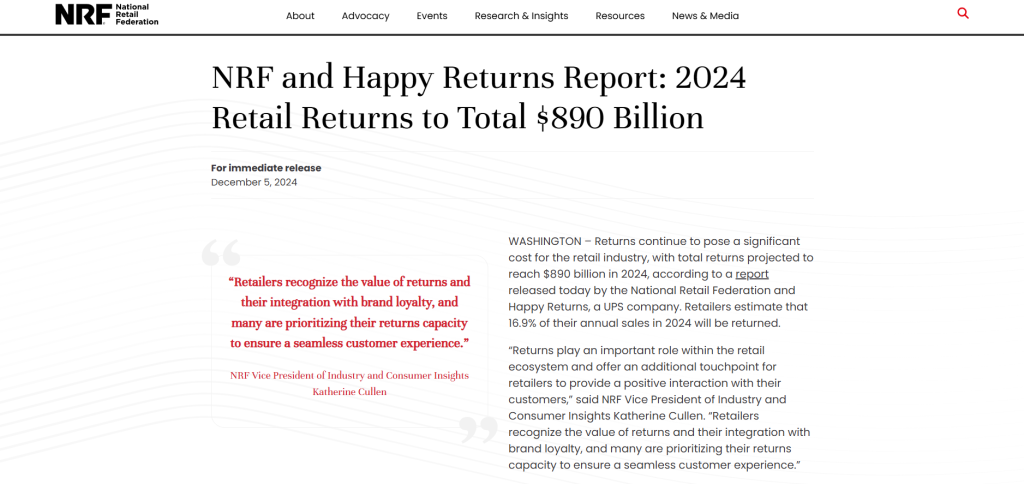
In 2024, shoppers in the United States returned an estimated $890 billion in merchandise, which is about 24.5% of all retail sales. Online stores carry a bigger share of this burden. The average all sale return rate hit 16.9% in 2024 according to the National Retail Federation, and because online returns run 21% higher than overall retail, the real ecommerce rate sits closer to 20%.
Each return also costs more to process than it used to. Return shipping alone runs about $8 to $12 per item, on top of roughly $15 per item in handling costs. The major carriers haven’t helped: both UPS and FedEx raised rates by about 6.9% in recent years, and the Reverse Logistics Association’s Returns Index showed quarterly costs jumping nearly 13% from late 2023 to early 2024.
Zoom out, and the global reverse logistics market was worth $395 billion in 2024. It’s projected to grow 8.1% a year and reach $650 billion by 2030, mostly because online returns keep climbing.
Some situations leave no doubt. The cost belongs to the store, full stop.
You sent the wrong item. If a customer gets the wrong size, the wrong color, or a completely different product, that’s a fulfillment mistake. Free return shipping isn’t optional here, and you should ship the correct item at no charge, too. Some stores even offer a “returnless refund” in this case, letting the customer keep the wrong item as a goodwill gesture while still getting the right one. If the item costs more to ship back than it’s worth, this actually saves money.
The item is broken or defective. Whether something cracked in transit or had a factory flaw, the customer gets a free return. This isn’t just good manners. In many places it’s the law, which we’ll get to shortly. Making someone pay to send back a defective product is one of the quickest ways to lose them for good.
The package arrived late. When a customer orders something time-sensitive, like a dress for a wedding or a birthday gift, and it shows up after the promised date, it may be useless to them. Stores should offer free returns here without being asked. Pushing that cost onto the buyer punishes them for the store’s delivery failure, and it stings the brand’s reputation.
The product didn’t match its description. If what arrived doesn’t match the photos, specs, or details on the product page, the return is on the store. Clear photos and honest size guides prevent most of these, but when the mistake happens, covering the shipping is the right move.
Most returns aren’t about merchant mistakes. They happen because the buyer changed their mind. For those, charging for return shipping is increasingly normal and easy to justify.
A few years back, free returns were almost a given. That’s changing fast. Over 63% of Loop merchants now charge return fees, up from just 47% at the start of 2020, and they’ve seen no real dip in repeat purchases. A separate 2025 study found that 72% of merchants now charge for at least some return options, usually pointing to higher shipping costs and return fraud as the reasons.
Even the giants have shifted. Amazon, Kohl’s, and J. Crew all charge return shipping on at least some returns, while still offering free in-store drop-offs or free returns at certain points.
Plenty of merchants worry that any return fee will tank sales. The data says it’s more nuanced. 70% of shoppers say they’ll pay for a more convenient, premium return experience. At the same time, only 45% say they’d pay for returns no matter what, with their willingness tied to income and how smooth the process feels. The takeaway is simple: customers will pay if the process is fast, easy, and clear. They won’t pay to wrestle with a slow, confusing system.
Return rules change a lot depending on where you sell, so merchants working across borders need to know the baseline in each market.
There’s no federal law forcing free returns on online purchases in the U.S. State consumer laws differ, but every state requires sellers to honor whatever policy they advertise. The FTC’s Mail, Internet, or Telephone Order Merchandise Rule covers shipping timelines and refund processing, but it doesn’t decide who pays for return shipping itself.
In practice, when a product is defective or clearly not as described, most legal readings, backed by state consumer laws, put return shipping on the merchant. For change-of-mind returns, the store’s stated policy is what counts.
The EU gives shoppers much stronger protection. Under the Consumer Rights Directive (Directive 2011/83/EU), online buyers get a 14-day cooling-off period to return almost anything for any reason. The key rules:
UK law works much the same way after Brexit, requiring refunds within 14 days and clear, upfront communication about who pays for return shipping.
Here the seller is legally on the hook for return shipping when a product is faulty or defective, and merchants can’t charge restocking fees on defective items. For change-of-mind returns, the store’s policy rules, and covering shipping on minor faults is optional.
Deciding who pays isn’t just an operations question. It’s a strategy call. Here’s how the trade-offs shake out.
Easy returns build loyalty. 92% of customers say they’ll buy again if returns are simple, and a good return experience leads to 57% more spending later on. Stores with painless returns tend to see higher customer lifetime value because people buy with more confidence. UPS data cited across several sources points to lifts in lifetime value as large as 357%.
The policy itself drives sales too. 67% of shoppers check the return policy before buying. Among them, 52% have walked away from a purchase because the policy felt complicated or restrictive, and 27% abandon their cart when the return process is unclear. Researchers describe return policies as “risk-reduction cues,” which matter most on expensive items where the buyer feels they have more to lose.
In crowded, price-sensitive categories where several sellers offer similar products, free returns can be the thing that tips a shopper toward you.
The math increasingly favors a smarter approach. Blanket free returns were built to earn trust in the early days of online shopping. They were never meant to absorb the cost of people treating online stores like fitting rooms.
Shipping is only part of the expense. Returns pile on processing labor, restocking, repackaging, markdowns on returned stock, and sometimes items that can’t be resold at all. Add it all up and returns can eat 15% to 20% of revenue when no one manages them carefully. Fraud makes it worse. A 2023 NRF report estimated U.S. retailers lost $101 billion to return fraud, with deliberate scams like empty boxes and fake damage claims making up about 9% of all returns.
The right policy depends on your business. These factors point the way:
| Factor | Lean Toward Free Returns | Lean Toward Charging |
| Customer lifetime value | High, repeat buyers worth keeping | Low, mostly one-time buyers |
| Product category | Fashion, apparel, high-ticket items | Commodities, consumables |
| Competition | Rivals offer free returns | Paid returns are the norm |
| Return rate | Low (under 10%) | High (above 20%) |
| Return reason | Mostly merchant error or sizing | Mostly buyer preference |
| Margins | High-margin products | Thin-margin products |
The sharpest merchants in 2026 don’t pick “free for everyone” or “charge everyone.” They shape the return experience around the situation.
If a customer wants a different size or color, the money stays with your brand, so free return shipping on exchanges is a smart retention play. A refund means the customer pays shipping; an exchange means they don’t. BBC data shows 40% of customers pick an exchange over a refund when the process is easy, which keeps the sale alive and cuts refund losses.
VIPs and loyalty members get free return shipping as a perk, while first-time or unregistered buyers pay. That gives people a reason to join the program while protecting margins on lower-value relationships. Around 63% of UK retailers and 40% of US retailers already charge for returns in some form, so tiered setups are becoming standard.
Offering free returns at physical drop-off spots (stores, carrier networks, locker systems) while charging for mailed returns lets customers choose. Those who want convenience pay for it; those with time to drop off don’t. Amazon, Kohl’s, and J. Crew all run this hybrid model.
Some stores let customers pay a small fee at checkout for free, easy returns later. It works like return insurance: it’s transparent, it appeals to people who want certainty, and it shifts the cost to those who actually use it.
When shipping and processing cost more than the item is worth, a returnless refund is often the smartest call. The customer gets a full refund and keeps the item, the store skips the reverse logistics, and everyone walks away satisfied. Amazon, Walmart, and many third-party sellers do this for low-value goods.
Instead of sending cash back, offer the refund as store credit or a gift card. The customer still gets full value, but the money stays in your store and becomes a future sale instead of a loss. It works best on change-of-mind returns, where the product is fine and the customer just wants something else.
Three ways to make it land:
One caution: be upfront that the refund comes as store credit before checkout, not as a surprise at return time. Hidden terms turn a retention win into a bad review and in the EU, undisclosed refund conditions can put you on the wrong side of consumer law.
Most returns aren’t your fault. They happen because a customer got the wrong size, saw a color that looked different on screen, or just changed their mind. In fact, size and fit alone account for up to 67–70% of fashion and apparel returns, and a further 22-28% of shoppers cite “looked different than expected” as their reason, meaning the product image or description didn’t match reality. Put simply: the vast majority of returned items are products shoppers actually wanted, just not that exact version.
Here’s the catch: every time one of them gets a refund, you lose twice. You pay $8 to $12 for the return label, and you lose the sale too. Do that across hundreds of orders a month, and returns can quietly eat 15% to 20% of your revenue. Handle it all by hand, and it’s worse – approving requests, making labels, chasing tracking, and processing refunds one by one drains hours you don’t have.
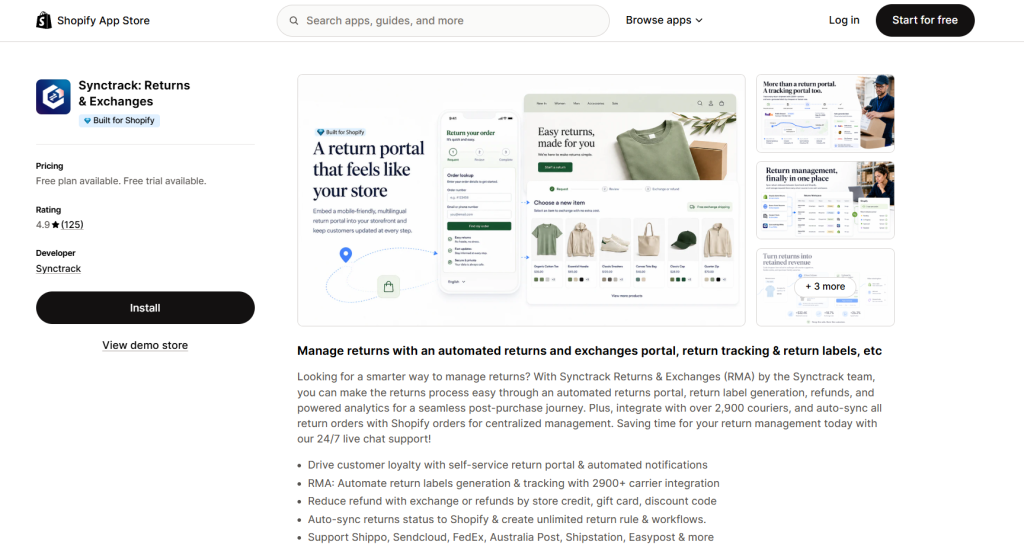
Synctrack Returns & Exchanges fixes this. It’s a Shopify-native app that automates the whole return flow and syncs two ways with your orders in real time. Here’s how it helps:
Best of all, there’s a free-forever plan to start, and pricing runs 20% to 40% cheaper than average. Synctrack turns return shipping from a cost you dread into an exchange that protects your profit.
There’s no single right answer to “who pays for return shipping.” The best policy is the one that:
The age of free returns for every situation is winding down. What’s taking its place is smarter: strategic, customer-segmented, clearly explained policies. Merchants who nail this will find that a well-built return policy isn’t a cost to shrink. It’s a competitive tool to put to work.