An Airwallex dispute needs more than a quick upload of an invoice or tracking screenshot. The merchant must first identify the stage, understand why the shopper challenged the payment, and decide whether the records support accepting or fighting the claim. A missed deadline can end the case automatically, while weak or irrelevant evidence can push it into a more expensive stage.
This guide covers the response windows, financial impact, evidence needed for common claims, and the steps for building a response that an issuing bank can review quickly.
An Airwallex dispute begins when a shopper asks the bank that issued their card to question a payment. The shopper may say the payment was unauthorized, the order never arrived, the product was not as described, a promised refund did not appear, or the same purchase was charged twice.
Airwallex receives the case through the relevant card scheme and shows it in the merchant’s account. It also sends dispute updates by email or webhook. The case includes details such as the disputed amount, payment, reason, stage, status, and response deadline. Airwallex provides the tools for accepting or challenging the claim, but the issuing bank and card-scheme process determine the outcome.
The word “dispute” is often used as if it means “chargeback,” but the two are not always identical. A dispute can begin as a request for information or a pre-chargeback case before money is formally charged back. Other cases go straight to chargeback. The route depends on the card brand, issuer, reason, transaction, and any pre-chargeback program attached to the account.
That distinction matters because the available action, deadline, fee, and movement of funds change from one stage to another.
The safest way to manage a case is to follow the stage and deadline shown in Airwallex rather than applying one general “chargeback deadline” to every dispute.
| Stage | What is happening? | Response time | What should the merchant do? |
| Request for Information (RFI) | The issuing bank asks for more details about the payment before deciding whether to open a chargeback. | 15 days | Refund the payment if the claim is valid. Otherwise, submit information that helps prove the payment is legitimate. |
| Pre-chargeback | An eligible dispute is handled before it becomes a formal chargeback. | 65 hours | Accept the early resolution or challenge it. A challenge moves the case to the chargeback stage. |
| Chargeback | The disputed amount and applicable fee are deducted, but the merchant can still contest the claim. | 15 days | Accept the chargeback or challenge it with evidence that directly addresses the dispute reason. |
| Pre-arbitration | The issuing bank escalates the dispute after the merchant’s chargeback response | Follow the deadline or request shown by Airwallex. | Provide additional information promptly if requested. Airwallex reviews the risk and decides whether to accept or continue the case. |
These are the standard windows described in Airwallex’s dispute flow. The deadline displayed on the individual case remains the operational source of truth. Teams should also set an earlier internal cutoff so there is time to review the response and fix missing files before submission.
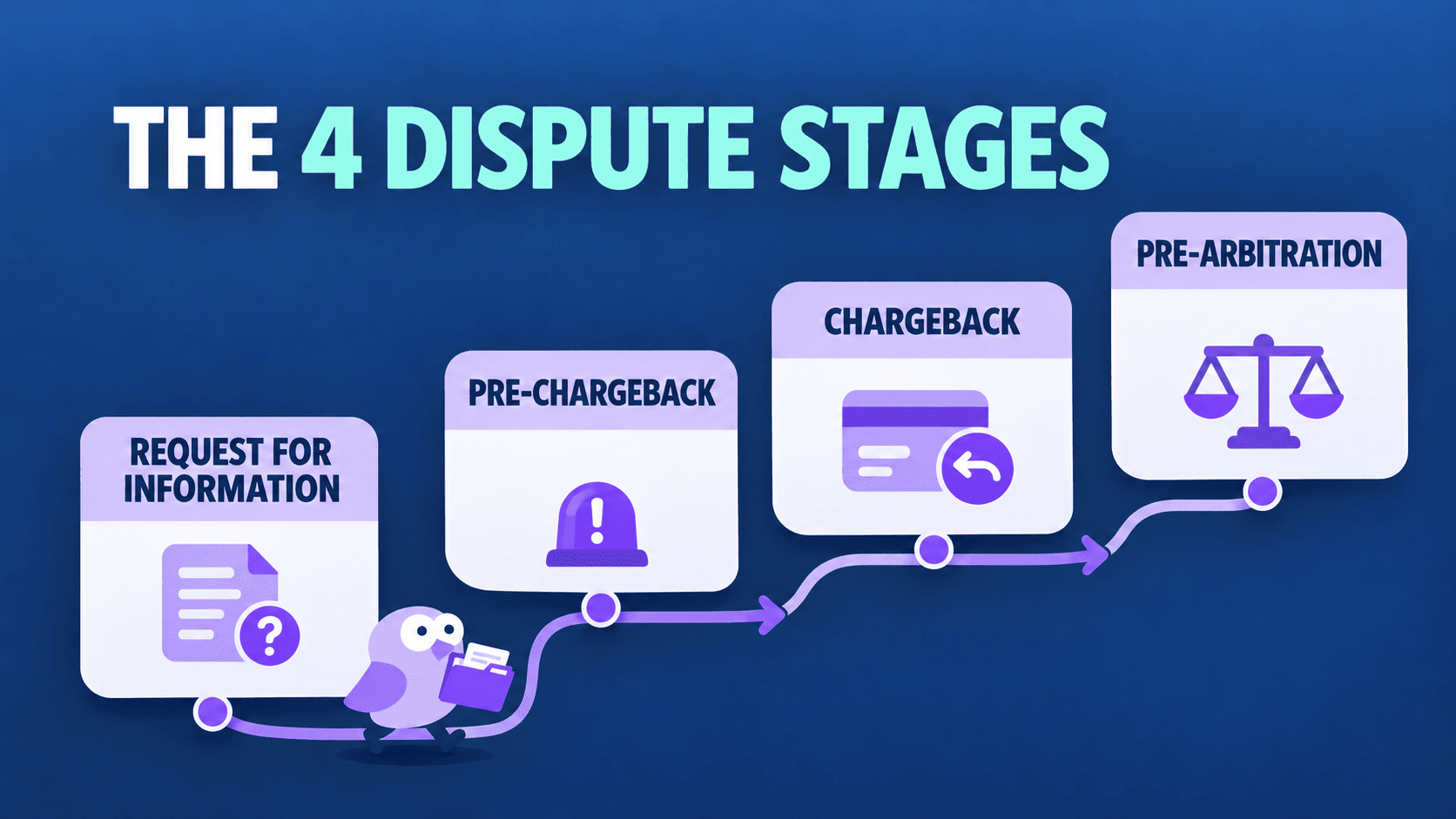
An RFI asks the merchant for more details about a payment. Visa and Mastercard no longer use this Airwallex stage, but other card brands may still send one.
The merchant can respond with information that helps the shopper recognize the payment or accept the request and refund the transaction. Airwallex notes that accepting an RFI does not automatically complete the refund; the merchant must initiate it. If the RFI expires after 15 days, the issuer may escalate the case to pre-chargeback or chargeback.
An RFI is an early chance to resolve confusion before the case becomes more expensive. A clear business name, order summary, service date, and customer communication may answer the claim.
Pre-chargeback programs aim to resolve eligible disputes before they count as chargebacks. Airwallex supports programs such as Visa Rapid Dispute Resolution and Mastercard Collaboration for enrolled accounts. Enrollment and auto-accept rules can depend on the merchant’s risk profile and dispute ratio.
Some pre-chargebacks are accepted automatically under configured rules. When a case requires a response, the merchant generally has 65 hours to accept or challenge it. Accepting deducts the disputed amount and a pre-chargeback resolution fee but resolves the case before it becomes a formal chargeback. Challenging moves the case to the chargeback stage. Once this happens, a standard chargeback fee applies, and the merchant will need to submit supporting evidence.
Airwallex does not require evidence when the merchant challenges a pre-chargeback. At this point, the merchant is only confirming the decision to contest the claim. The full evidence response is required after the issuer escalates the case to chargeback.
At chargeback, the disputed amount and chargeback fee are deducted through settlement. The merchant then has 15 days from the escalation to accept the case or challenge it with evidence.
If the merchant challenges, Airwallex sends the response to the issuing bank. The disputed amount may be credited back in the next settlement, although some case paths wait for a later decision. The issuer has up to 115 days after the challenge to escalate. If it does not, the case becomes won.
A win normally returns or preserves the disputed principal, but the original chargeback fee remains non-refundable. That is why a merchant should consider both the evidence and the economics before contesting a low-value or clearly valid claim.
Pre-arbitration happens when the issuing bank does not accept the merchant’s chargeback response. Airwallex reviews the case and decides whether to accept it or continue on the merchant’s behalf. It may request more information.
Further escalation can bring much higher fees. In most cases, Airwallex will accept on your behalf to help you avoid further fees (up to 500 USD). Continuing makes sense only when the evidence directly answers the claim and the value at risk justifies the cost.
Challenging every case is not a sound recovery strategy. The useful question is whether the claim is wrong and the available records can prove why.
Accepting is often better when:
A challenge is more reasonable when:
Even a customer withdrawal does not close a card dispute by itself. Airwallex advises merchants to challenge the case and submit the customer’s written confirmation before the deadline.
Before choosing, verify the reason code, stage, deadline, and financial effect shown on the case. If the records do not clearly contradict the claim, accepting may prevent additional cost.
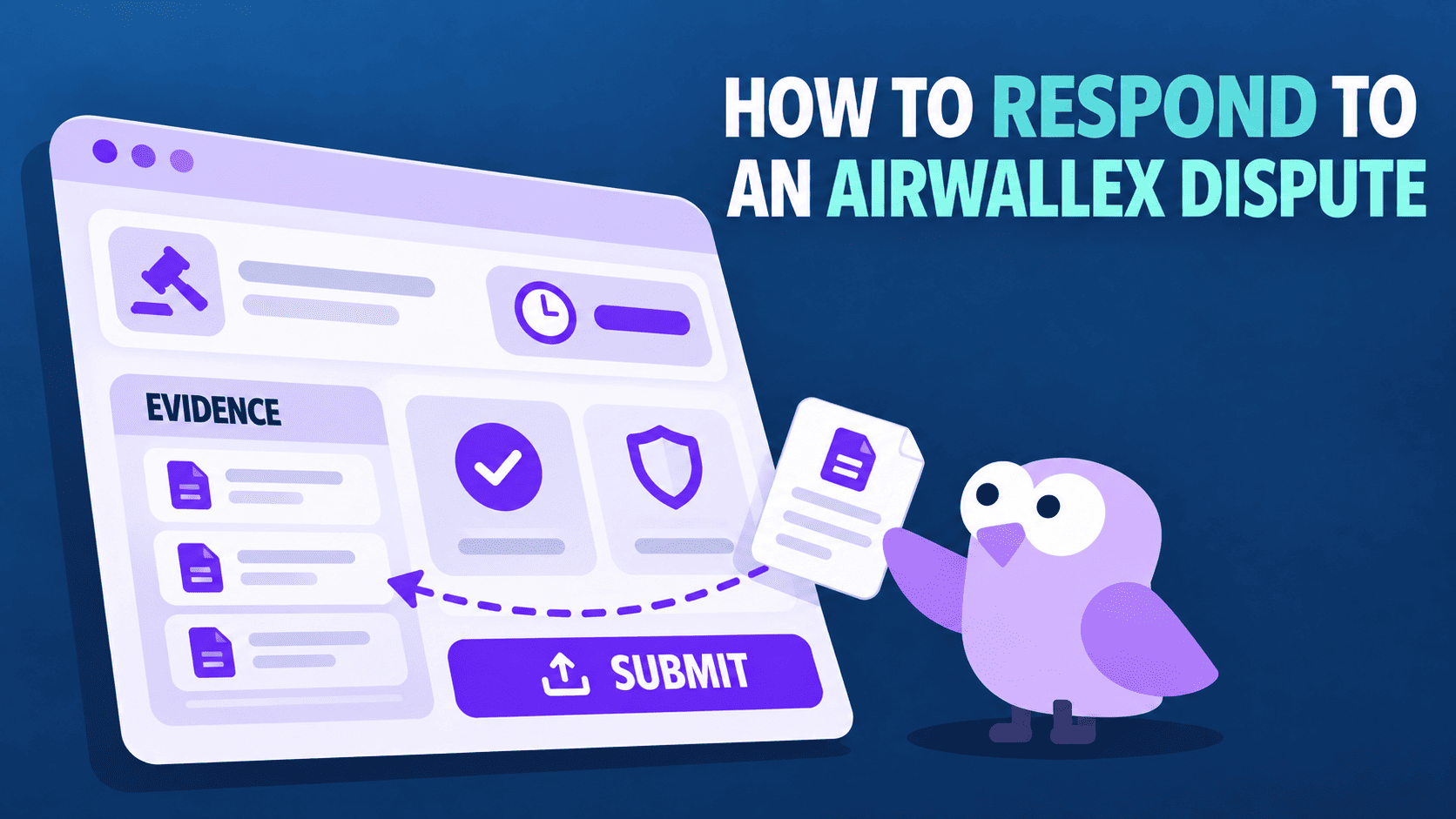
Airwallex allows merchants to manage disputes through its web app or API. The web app is the most direct route for a team handling cases manually.
Airwallex sends email notifications when a new dispute arrives, a status changes without a direct merchant action, or Airwallex acts on the merchant’s behalf. Merchants can choose individual notifications or a daily summary, while webhooks support automated dispute alerts.
Do not rely on one employee’s inbox. Give a backup team member access, review the response queue every business day, and assign each case an owner. A weekly check cannot protect a 65-hour pre-chargeback window.
Start with the case data rather than the order alone. Record:
This prevents a common error: preparing a delivery defense when the actual claim concerns a cancellation, refund, duplicate charge, or authorization issue.
Airwallex applies automated rules in several situations. It may respond on the merchant’s behalf when a full refund has already been issued, automatically accept certain pre-chargebacks under configured thresholds, and review pre-arbitration cases before deciding whether to continue.
Check the case status and accept reason before taking action. Cases marked as accepted, expired, reversed, or pending closure may not offer the same response options as cases that still require a response.
If the business agrees with the claim, accept it and correct the underlying problem. If the claim is inaccurate and the records can address the reason code, choose to challenges.
The Airwallex web app challenge flow shows the next steps, warns about possible higher fees, and recommends documents for the case.
Explain what happened in a short timeline: payment, fulfillment or service use, customer communication, refund or cancellation, and dispute notice. Each attachment should prove one point.
Evidence is not stronger because the file is longer. A reviewer should be able to identify the transaction, customer, product, relevant policy, and result without searching through unrelated pages.
Submit before the case deadline, retain the confirmation and files, and record the owner, status, and next review date.
Do not treat “challenged” as “won.” Continue monitoring while the issuer reviews the evidence.
The most useful evidence directly answers the reason code. A signed delivery record can support a non-delivery case, but it does not prove that a subscription was canceled correctly. An order confirmation proves an order was created, but not necessarily that the cardholder authorized it or received the product.
Airwallex publishes reason-specific dispute response guidance. The following checklist turns that guidance into a practical starting point.
| Dispute reason | What does the merchant need to prove? | Useful evidence |
| Fraudulent or unrecognized payment | The customer authorized the payment or benefited from the purchase. | 3DS results, IP and device data, billing and shipping details, previous undisputed orders, delivery proof, usage logs, and customer messages. |
| Product not received | The product or service was delivered as promised. | Order details, tracking number, dispatch and delivery dates, delivery address, recipient signature, service records, or digital access logs. |
| Product unacceptable or not as described | The product or service matched the description accepted at purchase. | Original product page, order details, photos, quality records, support messages, return offer, or evidence that the customer kept or used the product. |
| Canceled product or service | The charge followed the cancellation or renewal terms accepted by the customer. | Accepted cancellation policy, request and effective dates, renewal notice, cancellation confirmation, service period, and usage records. |
| Refund not processed | The refund was completed for the correct payment and amount. | Refund status, amount, date, original payment reference, ARN, settlement record, and details of any partial refund. |
| Duplicate charge | The charges came from separate purchases rather than one transaction being processed twice. | Separate order IDs, invoices, timestamps, product details, and fulfillment records for each purchase. |
| Processing or authorization error | The payment was authorized and processed with the correct amount and currency. | Authorization records, agreed price and currency, receipt, capture details, and refund or reversal records. |
For a physical order, connect the payment to the goods and shipment. Include the product, quantity, price, address, carrier, tracking number, shipped date, and delivery result.
A signature, delivery photo, GPS record, or customer message can add context to a generic “delivered” scan. If one item is disputed in a multi-item order, address that item rather than proving only that a package arrived.
Digital disputes depend on access and use rather than a carrier scan. Useful records include login dates, IP and device data, downloads, feature activity, service period, and messages from the registered email address.
Connect the activity to the disputed account and show when the benefit was provided. A general dashboard screenshot without a customer identifier or timestamp proves little.
For recurring billing, show the accepted terms, renewal schedule, cancellation policy and request, reminders, and access during the billed period.
For reservations, include the booking, service dates, cancellation or no-show terms, reminders, attendance records, and any credit offered. A policy helps only if the shopper saw and accepted it before payment.
A promised refund is not proof of completion. Use the payment reference, amount, date, status, and ARN. For a partial refund, explain what the credit covered and why another amount remains disputed.
For a withdrawal, retain a message from the customer’s email address that identifies the transaction. Submit it through the dispute workflow rather than waiting for the bank to close the case.
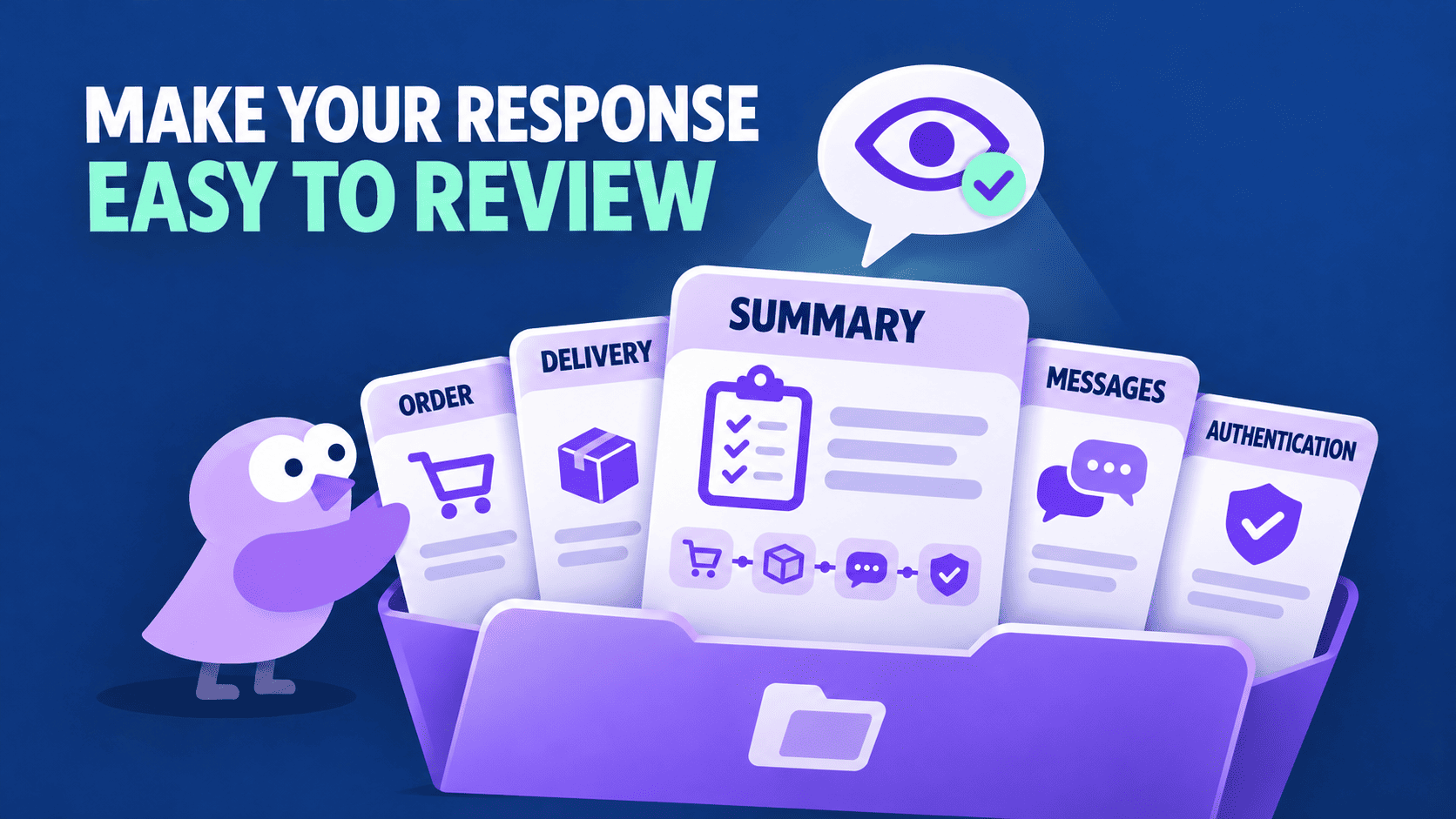
A strong response is complete, but it is also selective. Use a short opening statement that identifies the payment, claim, and merchant position. Follow it with a dated timeline and labeled evidence.
For example:
The shopper claims that order 1842 was not received. The order was placed on May 3, shipped to the address supplied at checkout on May 4, and delivered on May 7, within the stated five-day delivery window. The attached order record, carrier page, and signed delivery confirmation support those dates.
The statement tells the reviewer what the merchant is proving and where the proof appears. It does not need aggressive language or a long business description.
Before submission, check that:
Include only the relevant customer messages with dates and senders, not an entire support history.
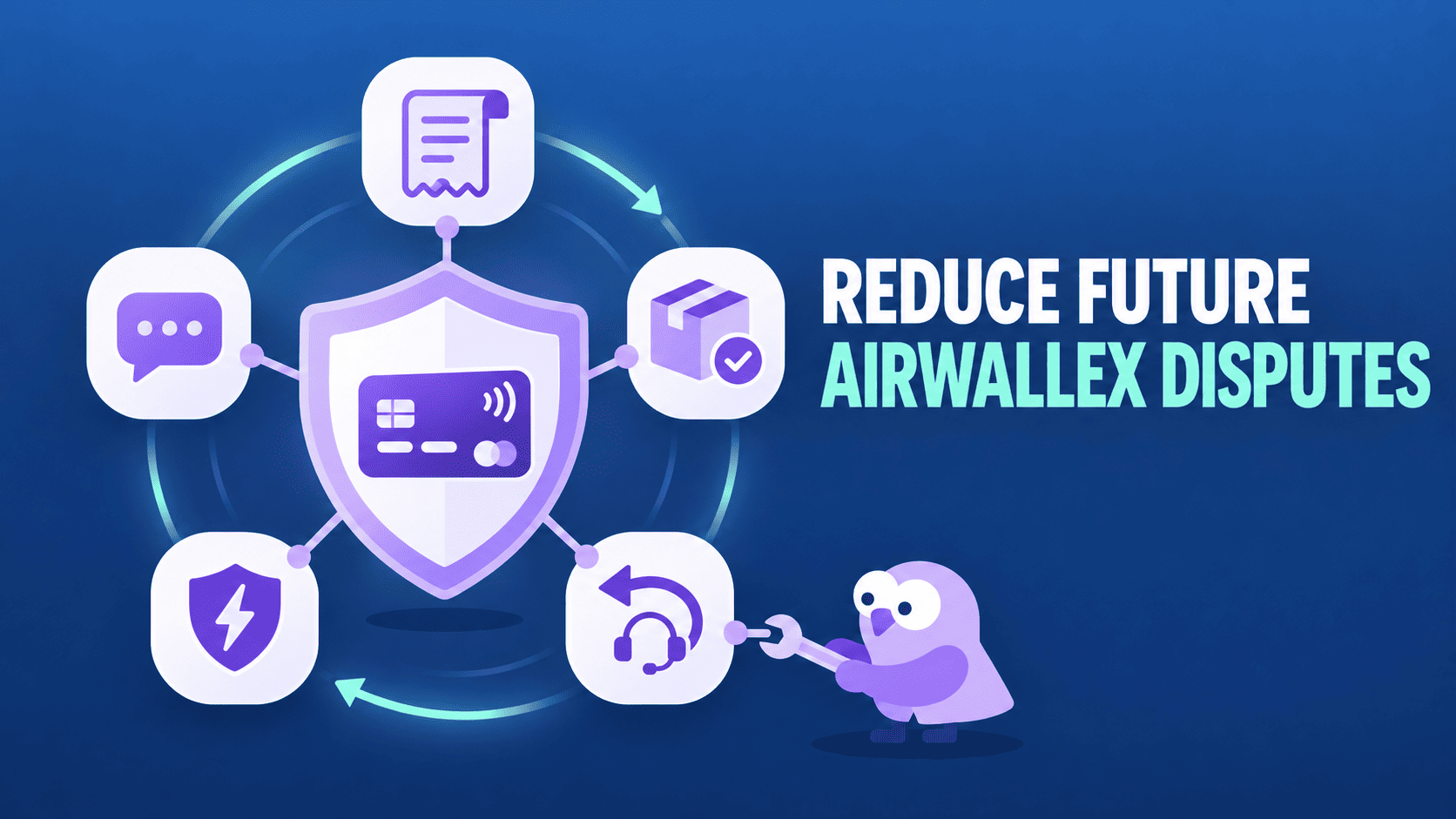
The dispute response process starts long before the notification. Clear customer records and payment controls can prevent some claims and make the remaining cases easier to answer.
Use a recognizable payment descriptor. Keep product details, delivery estimates, renewal terms, cancellation rules, and refund policies visible before payment. Send confirmations with consistent business details.
For card fraud, use Airwallex’s risk controls and 3D Secure where appropriate. Airwallex currently documents 3DS support for Mastercard, Visa, and UnionPay. Successful authentication can shift liability for eligible fraudulent card payment disputes, but it does not prevent every type of dispute.
Make it easy for shoppers to ask about an unknown charge, missing delivery, cancellation, or delayed refund before contacting their bank. Process valid refunds through the original payment method and retain the ARN.
Review dispute data by reason, product, country, carrier, and cause. Repeated non-delivery or cancellation claims may reveal a shipping failure or unclear subscription terms that need a broader fix.
For Shopify merchants, responding to an Airwallex dispute can require switching between the Airwallex account, Shopify order, carrier site, customer messages, and local evidence files. The response window continues to run while the team searches for matching information.
Synctrack now supports Airwallex dispute management in beta. After connecting an Airwallex account with a scoped API key, merchants can view the amount, reason, status, deadline, outcome, and linked Shopify order in one dispute workspace. Synctrack can also pull existing carrier and tracking details from the order, check evidence requirements, and submit supported responses to Airwallex.
The connection uses limited permissions for reading payments, reading and writing disputes, and uploading files. It does not require transfer-fund access. Synctrack checks Airwallex for updates every 10 minutes by default, while an optional webhook can provide near-real-time status updates.
The setup does not make every case worth challenging or guarantee a win. Its value is operational: the deadline sits beside the Shopify order, repeated data entry falls, and missing evidence can be caught before submission. Importing is available on all Synctrack plans; responding requires Basic or higher.
The best response to an Airwallex dispute is not the longest evidence file. It is a timely decision supported by a clear timeline and records that answer the exact claim. Track every stage, give each case an owner, and keep payment, order, fulfillment, refund, and customer data connected. When the evidence is weak or the complaint is valid, accept the case early. When the records support a challenge, make the issuer’s review as direct and easy as possible.