A Klarna dispute begins when a customer challenges a transaction or reports a problem with an order paid through Klarna. For merchants, the key questions are: Why did the customer dispute the order? What evidence does Klarna need? And when is the response due? According to Klarna’s dispute management guidelines, merchants must gather relevant evidence, submit it before the deadline, and address the customer’s claim through the dispute system.
Searches for “Klarna dispute” can come from customers or merchants. Customers may want to challenge a charge, while merchants may be looking for information about the Klarna dispute process, dispute charges, fees, or resolution. This guide focuses on merchants, especially Shopify stores that need to track cases and respond on time.
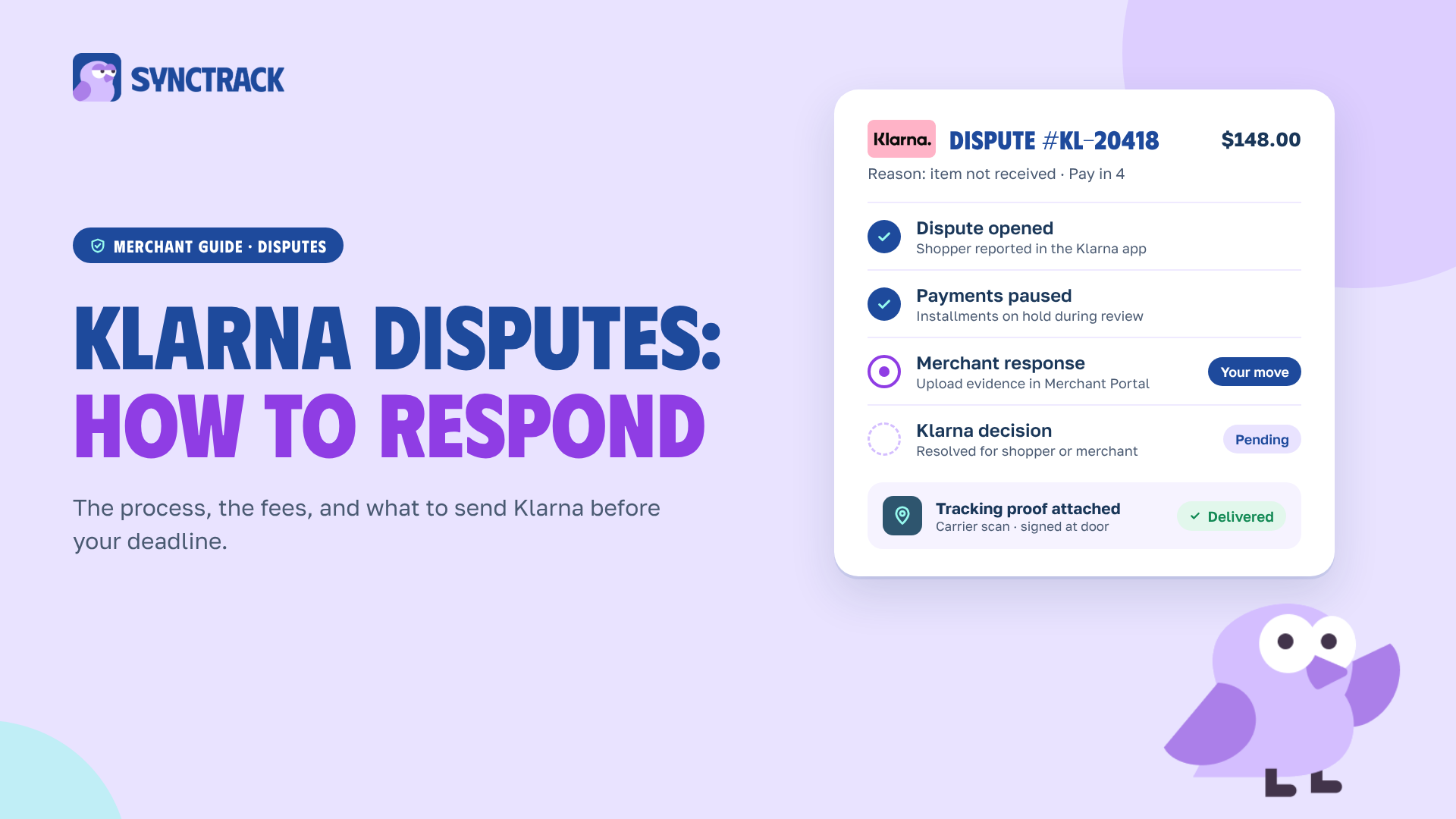
Klarna is moving merchants to a new dispute framework in 2026. According to its Disputes API V4 migration guide, accounts that haven’t already moved to FRAMEWORK_2026 are scheduled to be onboarded automatically on November 1, 2026.
For disputes opened from that date, Klarna’s evidence-review period will decrease from up to 60 days to up to 30 days. Merchants will still have up to 21 days to submit evidence, but the deadline for each case may be shorter. Always check the deadline shown on the individual case.
For Shopify merchants who use several payment providers, keeping track of cases across different systems can take time. Synctrack has introduced Klarna dispute management for Shopify so merchants can manage Klarna cases alongside disputes from other payment gateways.

A Klarna dispute is a formal challenge to a Klarna transaction. A customer might report that an order never arrived, an item was defective, the amount was wrong, the purchase was unauthorized, or an expected refund never appeared. Under Klarna’s updated framework, these are the five main customer-facing dispute reasons. Klarna also recognizes additional categories related to high-risk purchases, compliance, and certain payment programs, as described in its dispute reason documentation.
A dispute is a request to review what happened; it doesn’t automatically mean the merchant did something wrong. Klarna gathers information from the customer and gives the merchant a chance to respond with evidence.
Under Klarna’s evidence submission requirements, evidence must relate to the disputed transaction, be readable and complete, and include a clear explanation of how it addresses the customer’s claim. Supporting documents must be uploaded in PDF format.
A Klarna dispute also isn’t always the same as a traditional card chargeback. Klarna handles standard Klarna Payments disputes through its own process. However, orders settled using Klarna-issued virtual cards follow different rules. As explained in Klarna’s Merchant Card Service dispute guide, these cases reach merchants as chargebacks through their acquirer.
If Klarna asks for evidence and the merchant misses the deadline, the case may close in the customer’s favor, even if the merchant might have had a valid defense. That makes the deadline as important as the evidence.
Under FRAMEWORK_2026, Klarna combines the opening of a dispute and the request for evidence in the INITIATED stage. Merchants can have up to 21 days from the dispute opening to respond. Once the merchant submits evidence, the case moves to REPRESENTMENT for Klarna’s review.
For disputes opened under the new framework before November 1, 2026, Klarna’s review can take up to 60 days. For disputes opened from November 1 onward, the review period is scheduled to decrease to 30 days.
Klarna estimates that the basic process may take up to 51 days after this change, excluding any later appeal or arbitration stages. These dates and stages are detailed in the official framework migration guide.
When a case enters the INITIATED state, check the dispute reason, evidence request, and response deadline. Klarna provides dispute details through its Merchant Portal and Disputes API.
Don’t assume every case gives you the full 21 days. That’s the maximum evidence-submission period under the new framework. Klarna advises integrations to use the case’s representment.expires_at field to identify the specific response deadline.
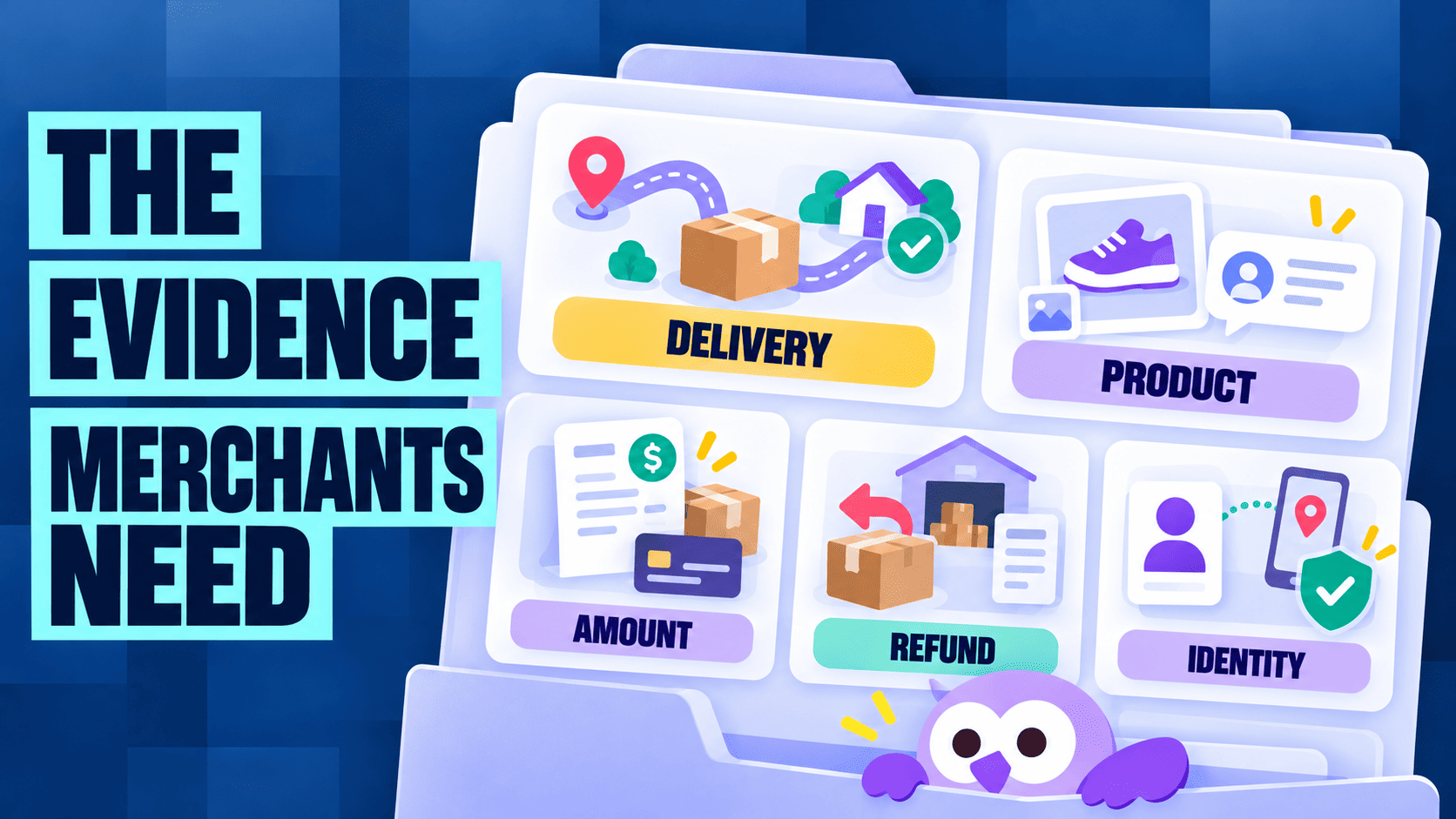
The evidence you need depends on the customer’s claim:
These evidence types follow Klarna’s dispute guidance for merchants.
If the customer’s claim is valid, accepting the loss or issuing the required refund may be more appropriate than submitting a weak defense. Klarna provides an “accept loss” option for cases the merchant doesn’t intend to contest.
If you decide to contest the dispute, submit a statement and supporting evidence before the case deadline.
The evidence must relate directly to the transaction. Missing, unclear, contradictory, or irrelevant documents can weaken the response. Klarna also lists asking for more time without providing a meaningful response as a reason a defense can fail.
After you submit evidence, the case moves to REPRESENTMENT for review. Merchants normally can’t add more evidence while Klarna reviews the case.
The case eventually closes as won or lost from the merchant’s perspective. If the merchant wins, Klarna accepts the defense. If the merchant loses, the customer receives the disputed amount and the applicable dispute fee may be charged. Missing the evidence deadline can also lead to a loss.
Klarna is introducing a more detailed appeal process. Its migration documentation says the full PRE_ARBITRATION and ARBITRATION stages will apply to disputes opened from March 1, 2027.
Under the appeal rules, eligible merchants have 10 days to challenge a preliminary adverse decision. Klarna decides which cases qualify, partly based on whether the merchant provided all requested information in the original response.
Some product pages already describe 10-day appeal support. Merchants should distinguish between a system that supports an appeal workflow and the date Klarna says that workflow becomes active for applicable disputes.
The phrase Klarna dispute charge can refer to the amount a customer is disputing, the amount returned to the customer after a decision, or the separate fee Klarna may charge the merchant. These are different amounts.
The disputed amount is the order or capture value being challenged. The dispute fee is a separate merchant cost.
For merchants with a direct Klarna Payments agreement, Klarna publishes standard and excessive dispute fees. Merchants who use Klarna through a payment service provider may not be billed directly by Klarna; their provider may have separate pass-through rules.
According to Klarna’s dispute fee schedule, the standard fee is €15 in listed euro markets and $15 in the United States. Merchants may pay twice the standard fee if they exceed Klarna’s dispute threshold.
Klarna defines the excessive tier as a dispute rate above 1.5% for three consecutive months, provided the merchant processed more than 100 orders during that period. Klarna evaluates each Merchant ID separately.
| Market | Standard Klarna dispute fee | Excessive dispute fee |
| Euro markets listed by Klarna | €15 | €30 |
| United States | $15 | $30 |
| United Kingdom | £10 | £20 |
| Canada | CAD 20 | CAD 40 |
| Australia | AUD 25 | AUD 50 |
| New Zealand | NZD 25 | NZD 50 |
Klarna also publishes local fees for Sweden, Norway, Denmark, Poland, Switzerland, Mexico, Hungary, Romania, and the Czech Republic. The full amounts are available in its dispute fee table by market.
Under the current Klarna Payments rules, the standard dispute fee applies when a dispute closes against the merchant. Klarna doesn’t charge that fee when the merchant wins. A separate change is planned for card chargebacks initiated on or after March 1, 2027: those cases may carry a dispute fee regardless of outcome, with an exception for qualifying unauthorized-purchase representations.
Not necessarily. Some information about the new framework suggests that Klarna holds funds as soon as a dispute opens. However, Klarna’s updated migration documentation gives a more specific rule: the default FRAMEWORK_2026 hold policy is NONE.
Klarna says a different policy, ON_DISPUTE_INITIATED, which would create a chargeback when a case enters INITIATED and reverse it if the merchant wins, is planned for a separate future rollout. Klarna says this rollout is separate from the November 1, 2026 framework change. Check your account’s current configuration when planning cash flow.
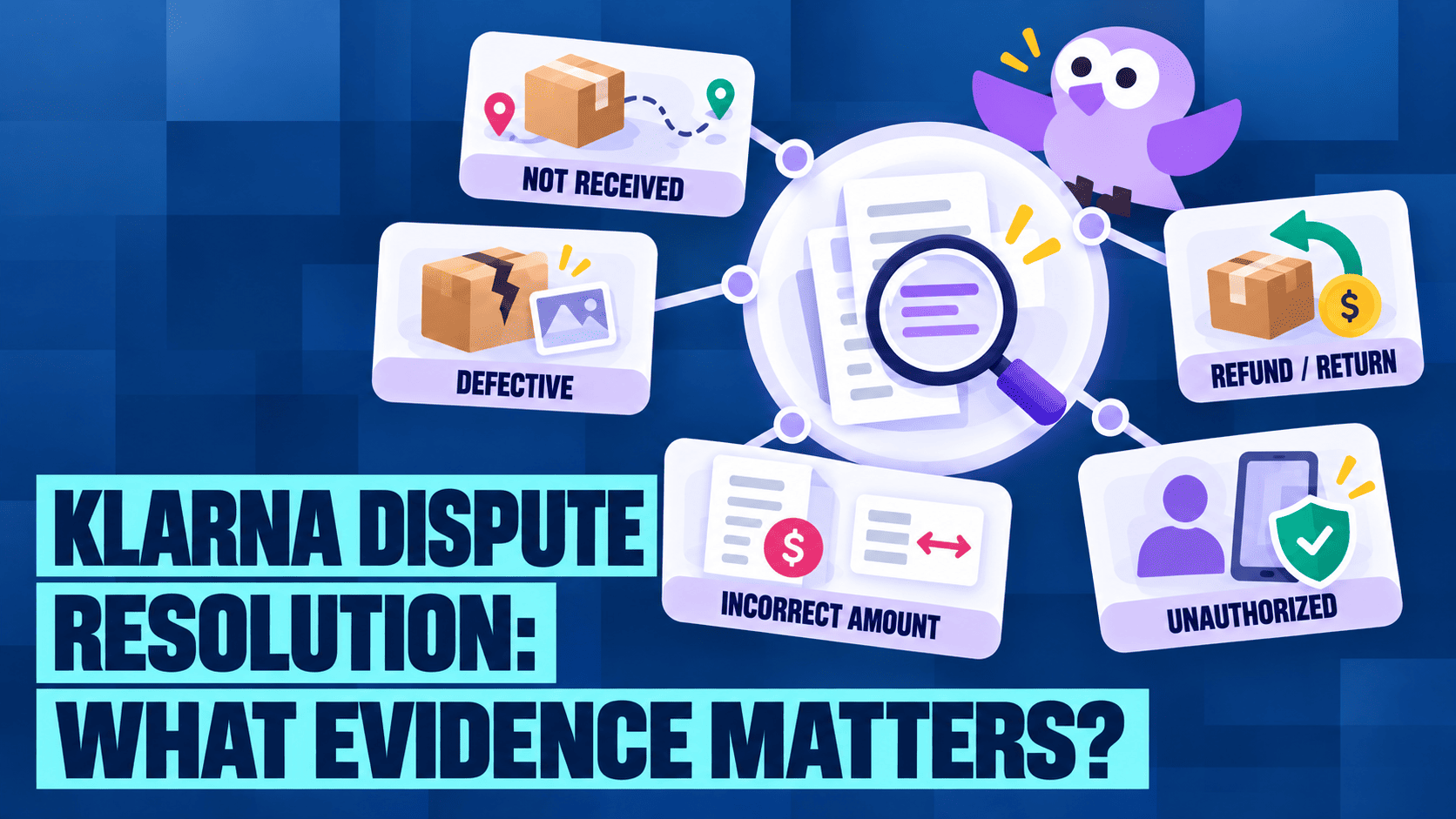
A strong response doesn’t need a large stack of documents. It needs evidence that answers the specific claim.
Klarna says evidence should be complete, readable, directly linked to the disputed capture, and clearly explained. It also recommends providing a short timeline of relevant events, such as the order, shipment, return, and refund.
These requirements appear in Klarna’s official evidence guidelines.
For an item-not-received dispute, Klarna focuses on valid proof of delivery (POD).
A link to a tracking page alone doesn’t meet Klarna’s current evidence requirements. Merchants must provide the required documentation as an attachment.
According to Klarna’s proof-of-delivery rules, documentation should establish that the order reached the correct destination. Depending on the order, this may include the tracking ID, delivery status, delivery date, recipient information, and matching delivery address.
“Label created” or “in transit” doesn’t prove that the order was delivered.
Fulfillment records, carrier GPS data, delivery photos, a shipment timeline, and customer messages may help. However, they don’t replace the mandatory proof of delivery.
State whether you consider the customer’s claim valid and explain why.
If you’ve already resolved the issue, show what you offered or provided. Depending on the case, this could include parts, compensation, a repair, a replacement, or a return.
If the customer returned the product, say whether you received it and whether a refund is due.
As Klarna’s defective-product evidence guidance explains, delivery proof alone won’t answer a claim that an item was damaged or significantly different from its description.
Provide an invoice or order record showing what the customer agreed to pay.
If the case involves a cancellation, adjustment, or refund, include records showing what happened and any terms that explain the amount charged or refunded.
Klarna requires invoice documentation linked to the disputed order. Its incorrect-amount dispute requirements also identify agreeing to issue a refund without actually issuing it as a reason a merchant response can fail.
An unauthorized-purchase claim means the customer says they didn’t make the transaction.
Klarna may consider delivery details, customer-verification steps, transaction data, account or login information, order history, and fraud checks.
Its merchant dispute overview recommends acting quickly on unauthorized-purchase claims and high-risk orders.
For a return or missing-refund dispute, explain what happened after the customer sent the product back.
State whether you received the return, whether you approved or rejected the refund, and why.
Useful evidence may include warehouse logs, inspection records, photos, the return policy, refund records, and messages with the customer.
Under Klarna’s refund dispute guidelines, if the customer’s tracking shows the return was delivered, simply saying it never arrived may not be enough.
A Shopify merchant may also need to respond to an open dispute even after issuing a refund. Synctrack’s Klarna response guide warns that refunding in Shopify does not replace answering the dispute.
When a case remains open and asks for action, respond through the dispute workflow instead of assuming another action has closed it.
Klarna provides its Merchant Portal and APIs for dispute management. These tools may be enough for stores with only a few cases. The process becomes harder when a Shopify merchant accepts payments through several providers and must check separate systems for Klarna, PayPal, Stripe, Shopify Payments, and other gateways. 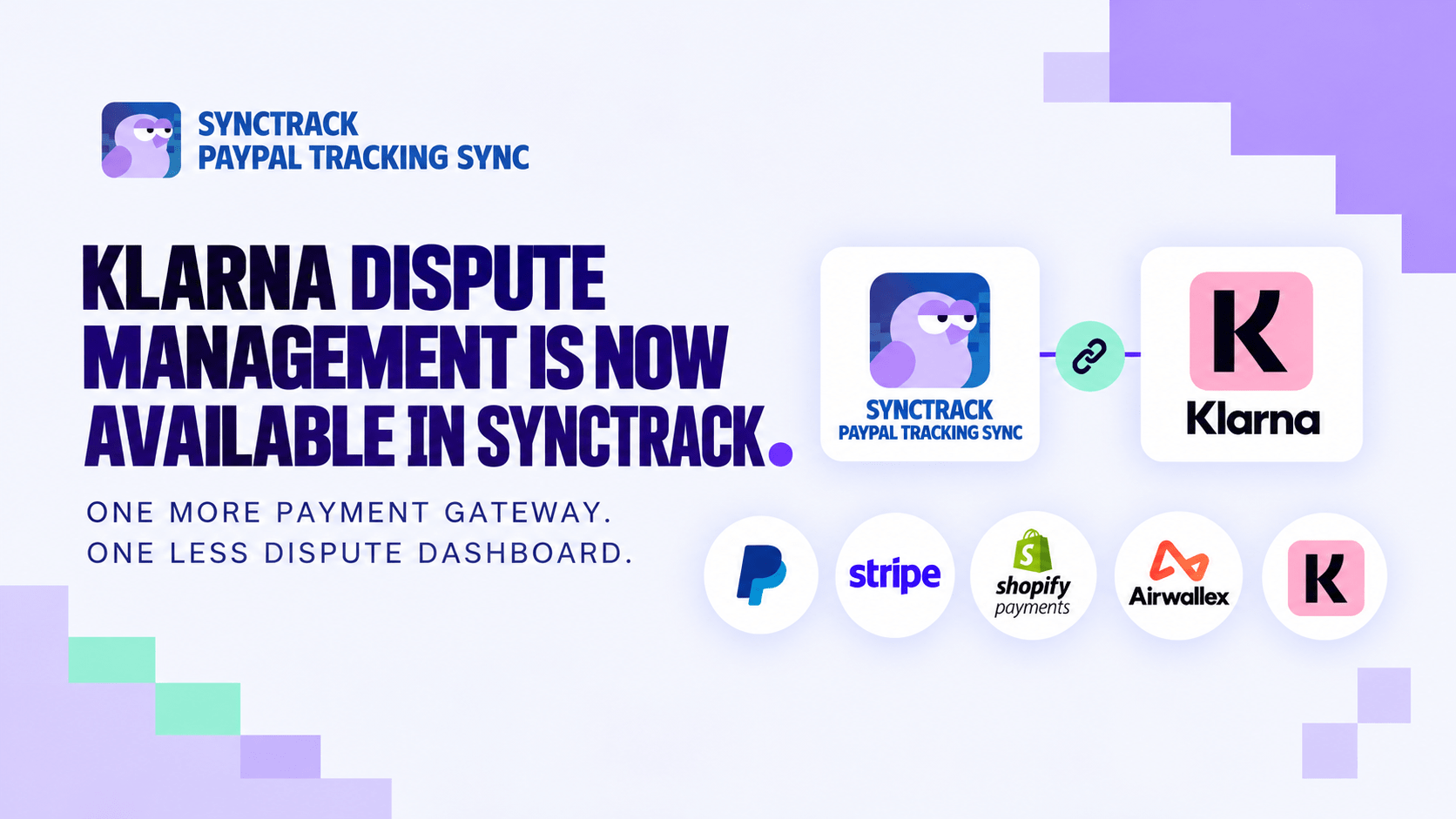
With Synctrack’s Klarna dispute management integration, merchants can handle Klarna disputes in the same Shopify-based workflow used for other payment providers. After connecting Klarna with an API key, disputes sync to the Klarna tab every 10 minutes. Merchants can see each case’s status, reason, amount, deadline, and related Shopify order without opening the Klarna Merchant Portal for daily case management.
Merchants can review a dispute, submit a response, accept the loss, and appeal when Klarna makes that option available. Synctrack supports multiple Klarna accounts and guides merchants through preparing a response, checking delivery details, uploading evidence, and reviewing the submission.
Where available, fulfillment details such as the carrier, tracking number, shipping date, delivery date, and address are pulled from the related Shopify order. Synctrack also creates a PDF summary and provides evidence checklists for five common dispute types: goods not received, defective products, incorrect amounts, unauthorized purchases, and return or refund issues.
This connection between Klarna disputes and Shopify order data matters because Klarna requires evidence that directly addresses the customer’s claim. For example, an item-not-received case needs delivery details and proof that the shipment reached the correct destination, rather than only a tracking link.
Klarna is Synctrack’s fifth supported dispute gateway, alongside PayPal, Stripe, Shopify Payments, and Airwallex. Bringing these cases into one dashboard helps merchants monitor deadlines and manage evidence across payment providers.
Merchants using Klarna through Shopify Payments may already manage those cases in Shopify Admin. Synctrack is most useful for businesses that want to bring Klarna and other gateways into one dispute workflow with connected order data and deadline tracking.
Accurate product information, traceable shipping, clear return policies, and responsive support can help prevent disputes. When a dispute does open, Synctrack helps merchants find the case, prepare relevant evidence, and respond before the deadline – reducing the risk of losing a valid case simply because it was missed.
Can you dispute a payment with Klarna?
Yes. Customers can dispute a Klarna payment for problems such as a missing order, unauthorized purchase, incorrect charge, defective product, or unprocessed refund. Klarna may then ask the merchant to respond with supporting evidence.
How do you win a Klarna dispute?
Submit clear evidence that directly answers the customer’s claim before the case deadline. Depending on the dispute, this may include proof of delivery, invoices, customer messages, return records, refund confirmation, or information connecting the customer to the purchase. Missing the deadline can cause the case to close in the customer’s favor.
Is it hard to get a refund from Klarna?
It depends on the order problem and the available evidence. Customers should contact the merchant first and report the issue to Klarna if it remains unresolved. Klarna may pause the payment during its review, but opening a dispute doesn’t guarantee a refund.
How long does Klarna take to resolve a dispute?
Under FRAMEWORK_2026, merchants may have up to 21 days to submit evidence. For disputes opened from November 1, 2026, Klarna’s evidence review may take up to 30 days. Cases involving appeals or arbitration can take longer.
How much is the Klarna dispute fee?
For direct Klarna Payments merchants, the standard fee is €15 in listed euro markets, $15 in the United States, £10 in the UK, CAD 20 in Canada, and AUD 25 in Australia. Excessive-dispute fees are generally twice these amounts. Under the current rules, merchants don’t pay the standard fee when they win an ordinary Klarna Payments dispute.
You can check the full Klarna dispute fee schedule for your market.
Can merchants manage Klarna disputes without opening the Klarna Merchant Portal?
Yes. Synctrack lets merchants review Klarna cases, access the related Shopify order, prepare evidence, submit a response, accept a loss, and appeal when available. After the API connection, disputes sync to the Klarna tab every 10 minutes.
Its Klarna dispute management documentation explains how to connect an account and manage supported disputes from Shopify.
A Klarna dispute is easier to manage when merchants understand the claim, collect evidence that directly addresses it, and respond before the deadline. Clear order records, delivery proof, customer messages, and refund details can strengthen a case, while missed deadlines may lead to unnecessary losses and fees. For Shopify stores handling disputes across several payment providers, Synctrack brings Klarna cases, deadlines, evidence, and related order details into one workflow. This helps teams respond faster, stay organized, and reduce the risk of losing a valid dispute simply because a case was overlooked.