Running a Shopify store gets harder once orders start piling up. Packing boxes in your living room is fine at 10 orders a day. At 200, it becomes a problem. That’s when most merchants start looking into a Shopify 3PL.
A 3PL takes over the warehouse, packing, and shipping work so you can spend more time on products, marketing, and growth. This guide walks through what 3PL fulfillment actually means, how it connects to Shopify, the best providers to consider, and what the whole thing usually costs.
3PL fulfillment stands for third-party logistics fulfillment. In plain terms, it means paying another company to store your products, pack your orders, and ship them to your customers.
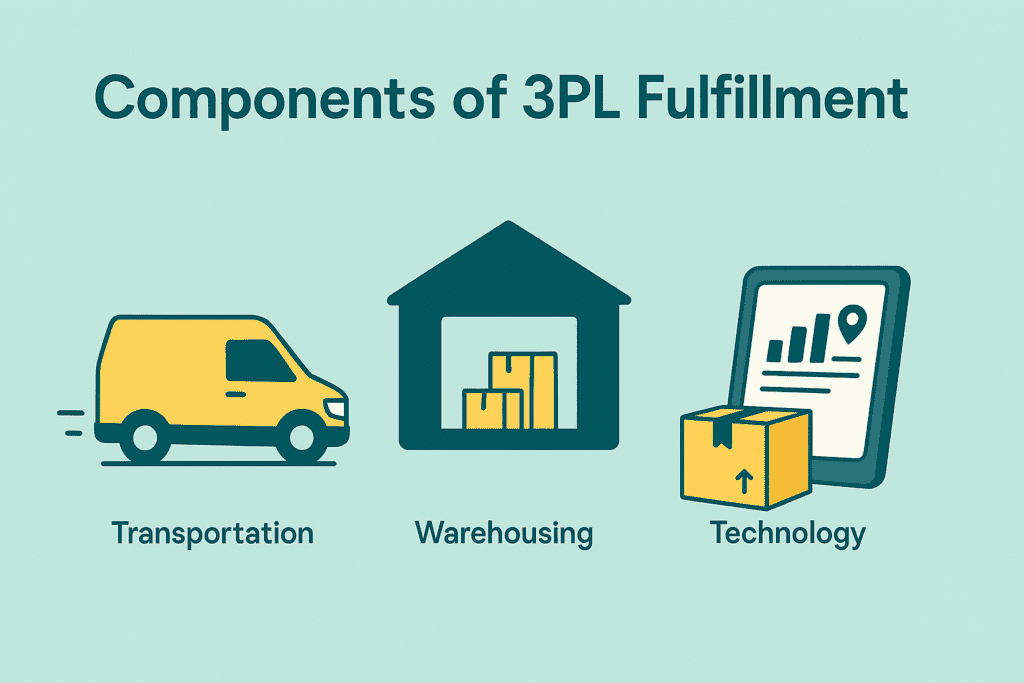
Here’s how it works. You send your stock to their warehouse. They keep it on their shelves. When a customer buys something from your Shopify store, their team grabs the item, puts it in a box, and ships it out. You never touch the product.
Think of a 3PL as your behind-the-scenes shipping team. You handle the storefront and the marketing. They handle the boxes.
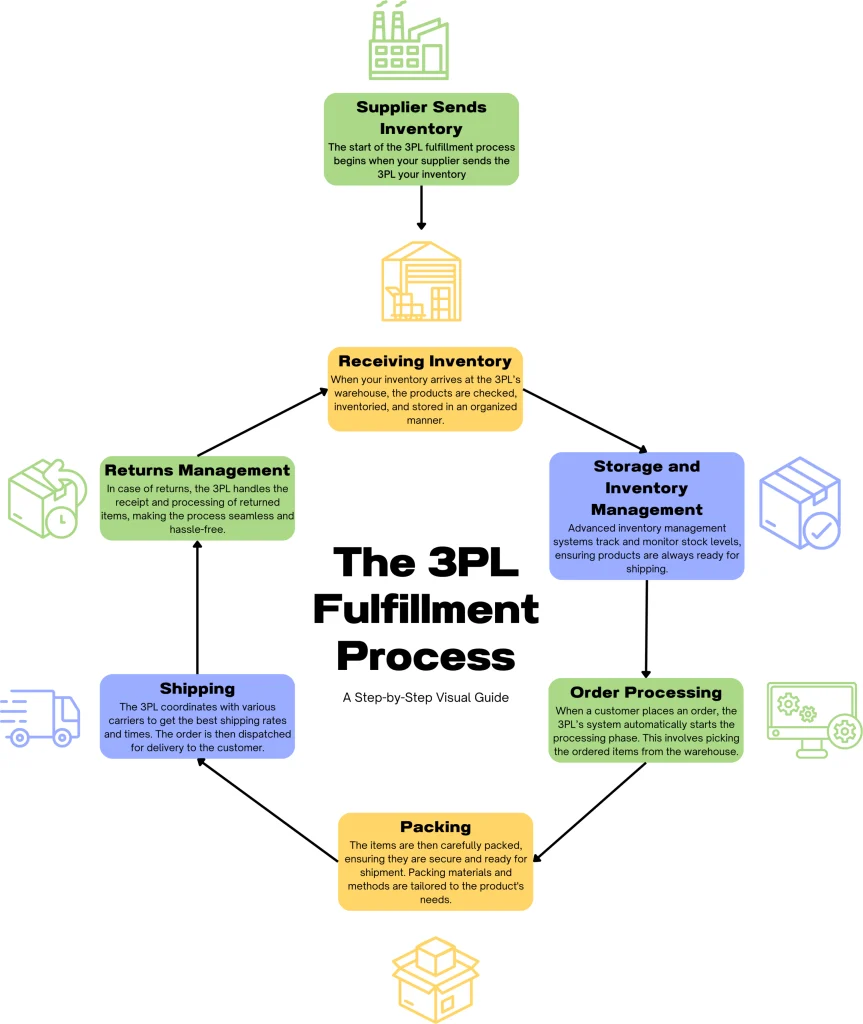
A good 3PL does more than just ship boxes. Most cover the full job from start to finish:
Some 3PLs go further with extras like branded boxes, gift notes, custom inserts, and freight shipping. What’s included depends on the provider.
There’s no exact moment when self-shipping stops working. But a few signs show up again and again:
Outsourcing isn’t about losing control. It’s about letting someone else handle the boxes so you can focus on growing the brand.
Most Shopify merchants switch to a 3PL once they hit 100 to 500 orders a month. Below that, doing it yourself is often cheaper. Above that, the costs of storage, packing materials, post office runs, and lost time add up fast.
A 3PL doesn’t just save time. It opens up options that are hard to reach with self-fulfillment:
Shopify gives you a few ways to outsource fulfillment. The setup you pick affects how orders move, how stock stays up to date, and how much you can see inside your admin.
Shopify’s own setup docs say you can ship orders yourself, use a third-party service, or mix both across different products in the same order.
There are 3 main ways to go:
For most growing Shopify stores, the app-based route is the clear winner. The link is tighter, and your data stays clean.
Shopify Fulfillment Network (SFN) sometimes throws merchants off. It used to be Shopify’s own set of warehouses. Today, it works more like a list of trusted 3PL partners you can manage from inside Shopify.
When you install the SFN app, you pick a partner from the list and run everything from your admin. Partners include Amazon Multi-Channel Fulfillment, DHL, Flexport, GoBolt, Shipfusion, and ShipBob.
Flexport has a special spot here. After Flexport acquired Shopify Logistics (which included Deliverr) in June 2023, it became built into Shopify admin through the SFN workflow. So when people say “SFN,” they often mean Flexport doing the work behind the scenes.
Here’s the part most “best 3PL” articles skip. Shopify uses locations and order routing to decide where each order ships from.
Every 3PL you connect shows up as its own location in your Shopify admin. If your stock sits in two or three warehouses, Shopify picks the best one for each order on its own. The default rules try to:
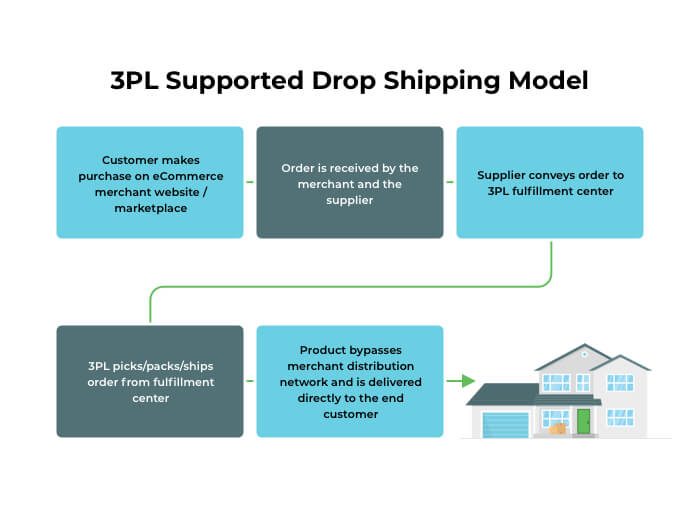
Behind the scenes, Shopify creates a fulfillment order every time someone buys something. The 3PL’s app picks up that fulfillment order, ships it out, and sends the update back. This is why split shipments matter so much. If the same product sits in two warehouses, Shopify can pick the closer one and save you money on shipping.
Here’s the flow in one simple line: Customer buys -> Shopify creates the order -> Order routing picks the best warehouse -> 3PL app gets the fulfillment order -> Warehouse picks, packs, and ships -> Tracking and stock updates flow back to Shopify.
There’s no single best 3PL for every store. The right pick depends on how many orders you ship, what you sell, where your customers live, and how complex your setup is. Here are the top options sorted by use case.
| Top pick | Quick Look at Each Provider |
| ShipBob | 60+ warehouses across the US, Canada, UK, EU, and Australia. Ships to 250+ countries. 99.6% on-time rate. Great fit for DTC brands going global. |
| Flexport | Freight, customs, storage, shipping, and returns under one roof. Same-day shipping for orders placed before 11 AM PST. Best for international brands. |
| ShipMonk | Warehouses in North America, the UK, and Europe. Deep tech for kitting, ERP, and analytics. Returns via Loop and Happy Return. |
| GoBolt | 12 warehouses across the US and Canada. Extras like order tagging, merged orders, and fulfillment holds. |
| RyderShip | 20+ warehouses across seven US cities. 10M+ square feet. Same-day and next-day options. Returns via Happy Returns, Loop, and ReturnGO. |
| Red Stag Fulfillment | Two warehouses in TN and UT. Reaches 96% of US addresses in 2 days. Known for accurate picking and zero shrinkage. |
| Amazon MCF | Uses Amazon’s huge warehouse network. Easy Shopify app for stock sync. Catch: returns aren’t handled in the app. |
| Shipfusion | Warehouses in Chicago, Las Vegas, Toronto, and York, PA. Kettle & Fire cut order turnaround times 25% using Shipfusion. |
| byrd | Warehouses across the EU and UK. 20+ carriers, lot tracking, and dangerous goods handling. Address checks cut returns 20–40%. |
| Huboo | Warehouses in the UK, Spain, and the Netherlands. Branded returns portal. Starts from £1,000 per month. |
| Fulfillrite | Two US warehouses in NJ and UT. Same-day shipping. No setup fees or long contracts. $399 monthly minimum. |
3PL pricing isn’t easy to compare at a glance. Most providers don’t show a fixed price list because costs change based on what you sell, how much you ship, and where it goes. The smart way to compare is by total cost per order, not by one fee at a time
Here’s what usually shows up on a 3PL invoice:
| Fee type | Typical cost | What raises the price |
| Setup and integration | $100 to $1,500+ | Custom links, ERP work, onboarding |
| Storage | $15 to $40 per pallet per month | Location, climate control, slow-selling stock |
| Pick and pack | $0.20 to $5.00 per item | Multi-item orders, fragile goods, inserts |
| Shipping | 10% to 30% below standard rates | Distance, weight, speed, extra fees |
| Returns | Per return or per step | Inspection, restocking, return labels |
| Kitting and custom packaging | Custom or hourly | Hands-on work, inserts, quality checks |
Industry reports show the average B2C order costs around $3.25 to fulfill in 2025. Small, light orders can come in cheaper.
A few things push the per-order cost up:
ShipBob says one of its customers, Our Place, saved $1.5 million on shipping by going from two warehouses to four. That kind of saving only works at high volume, but it shows how much warehouse location matters.
When you ask a 3PL for a price, give them real numbers. Send:
Then compare the total cost per order across providers. A 3PL that looks cheap on pick-and-pack may charge more on storage or shipping. The full price is what counts.
Here’s a new H2 section using the Problem-Agitate-Solution structure to seed Synctrack AI Order Tracking. It fits naturally after the “How to Compare Quotes” section or before the FAQs:
Picking the right 3PL solves the warehouse side of shipping. But there’s a second half of the job most merchants miss: what happens after the box leaves the warehouse?
Once an order ships, customers want to know where it is. They want updates. They want a tracking link that actually works. And when they don’t get that, they email support. A lot.
Industry reports suggest that ‘Where Is My Order?’ (WISMO) Inquiries typically make up about 20% to 40% of e-commerce support requests, and can rise to around 50% during the peak shopping period. Every WISMO email pulls your team away from real growth work. Worse, slow or missing updates erode customer trust, even when the shipment itself is on time. A great 3PL can pack and ship the order in hours, but if the tracking experience is broken, the whole post-purchase journey falls apart. Customers blame the store, not the carrier.
This is where a tool like Synctrack Order Tracking fills the gap.
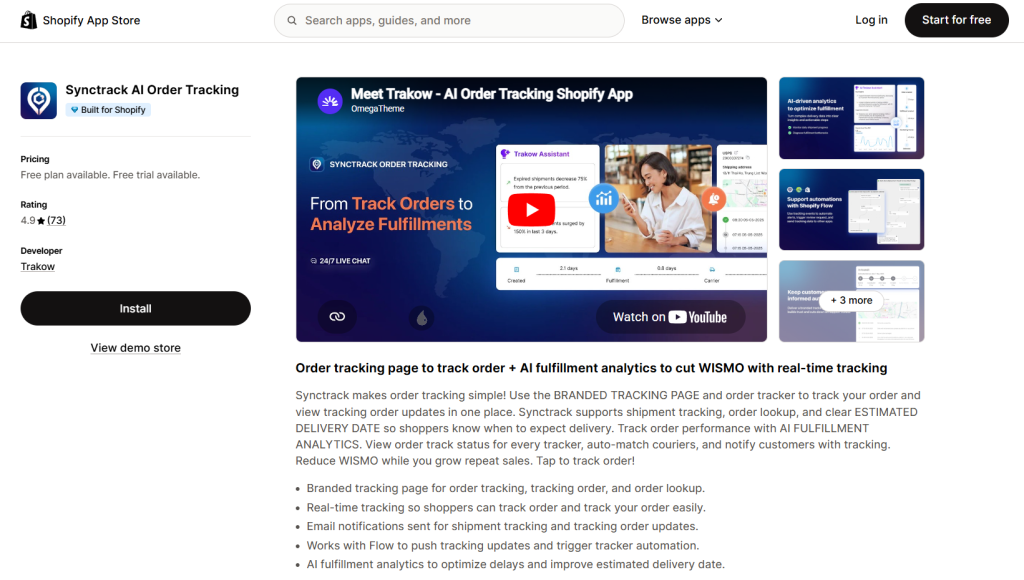
Synctrack turns every shipment into a clean, branded tracking experience right inside your Shopify store. Instead of sending customers to a confusing carrier website, they land on a tracking page that matches your brand and shows real-time updates. Key features include:
The result is fewer support tickets, more trust, and a stronger brand experience after the sale. Synctrack offers a free plan for up to 20 orders a month, with paid plans starting at $9/month for stores that need analytics and upsell tools.
Pair a solid Shopify 3PL with smart tracking, and the full shipping experience finally feels seamless, from the moment a customer clicks buy to the moment the package lands at their door.
Not in the traditional sense. Shopify Fulfillment Network is now a partner ecosystem that connects merchants with trusted 3PLs like Flexport, ShipBob, and others.
Yes. Shopify uses locations and order routing rules to send each order to the best warehouse based on stock, market, and distance.
Yes. Shopify lets merchants self-fulfill some products, use a 3PL for others, or mix methods across products in the same order.
Most can. Many offer return labels, inspection, restocking, disposal, branded return portals, or integration with returns apps.
A Shopify 3PL can change how a store operates. The right partner takes the daily grind off your plate and gives customers faster, more reliable shipping. The wrong partner can drain cash and damage trust. The best move is to look at the providers above, match a few to your product type and growth stage, and ask for real quotes based on a real order profile. Compare the total cost per order, not just the headline fees. Then test with a small batch before going all-in. Outsourcing fulfillment isn’t about losing control. It’s about freeing up time and energy to grow the business.