Every year, shipping networks hit a busy stretch called peak shipping season. Demand jumps, space gets tight, and prices rise worldwide. Peak shipping season isn’t one month. Timing depends on the shipping type and region. Ocean freight usually peaks from July to October. Parcel and e-commerce delivery peaks in November and December. Asia-based factories face a third rush around Lunar New Year, in January or February. This guide covers what months are peak season, why the rush happens, and how to prepare, whether you ship goods, run a store, or just want your holiday gifts on time.

Peak shipping season is the yearly period when shipping demand rises above normal network capacity. During this time, freight space gets tight, rates climb, and delays become more common than usual.
Logistics companies treat this as a repeating cycle, not a single event. Maersk describes shipping as naturally cyclical, with certain periods that create more demand and more pressure on carriers. DHL takes it a step further and says peak season really runs all year. It builds slowly through summer, then hits its highest point in the final months of the year.
For most searches, the short answer works well: peak shipping season usually falls in late Q3 through Q4. But the exact timing still depends on two things. First, the shipping mode you’re using, whether that’s ocean, air, or parcel delivery. Second, the region you’re shipping from or to.
People search this topic for two different reasons. Some just want a clear definition and a simple calendar. Others want to know when rates might rise, when carriers add extra fees, and how early they need to start planning. This guide covers both.
It also helps to know that peak shipping season looks different depending on which part of the supply chain you sit in. A factory owner feels the pressure through booking shortages and rushed production schedules. A retailer feels it through rising freight costs. A shopper usually only notices it when a package arrives later than expected.
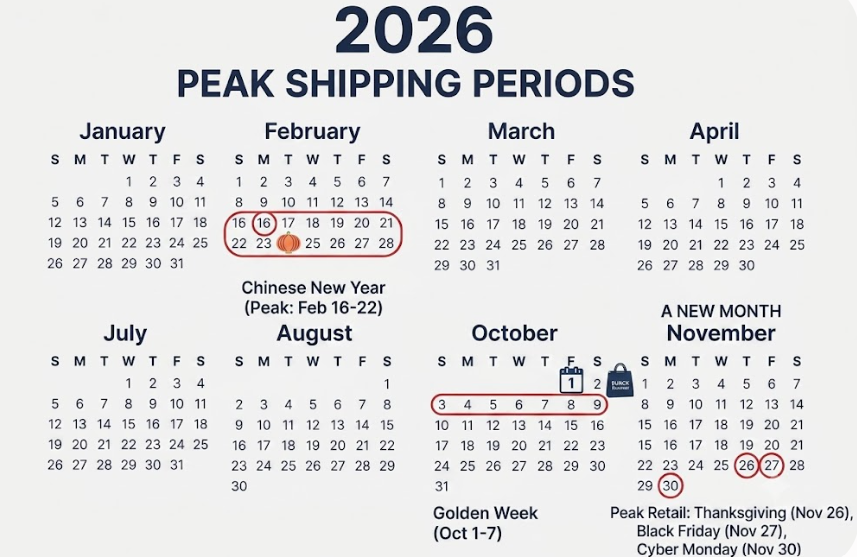
To answer what months are peak season, it helps to split shipping into three separate peaks. Each one hits at a different time of year, for a different reason.
Keep one thing in mind: shipping peaks hit the supply chain before they hit shoppers. Goods often leave the factory months before a customer sees them on a shelf or in a shopping cart. That’s why the ocean freight peak comes earlier in the year than the parcel delivery peak.
Sometimes businesses rush to ship goods earlier than usual. This happens when they expect new tariffs, port delays, or slow shipping later in the year. Moving early helps them beat the rush. This happened in July 2025. The Port of Los Angeles handled over one million shipping containers that month, its busiest month on record. Retailers pushed goods through early to avoid new tariffs.
Air freight works a bit differently. It costs more than ocean shipping, so businesses save it for urgent or high-value items instead of everyday restocking. That’s why air freight demand spikes hardest right before major holidays, when ocean shipments are already too slow to arrive on time.
Timing shifts depending on where goods ship from and where they’re headed. Here’s a simple regional breakdown.
| Region | Main peak months | Quick note |
| United States | July–December | Summer restocking builds into a strong import and parcel rush through the holidays |
| European Union | June–December | Summer and back-to-school buildup, followed by a late-year fulfillment peak |
| China | September–October and December–February | Pressure builds before Golden Week in October, then again before the Lunar New Year |
| Southeast Asia | July–December, plus Jan–Feb | Export buildup tied to China’s cycle, plus its own Lunar New Year closures |
| Australia | November–December | Black Friday through Christmas is the main rush; some cutoffs start in November |
Peak season in the U.S. starts with a summer import rush, then rolls straight into the holiday parcel rush. Ocean freight usually peaks in the third quarter. Parcel and last-mile delivery peak in November and December. Some retailers ship goods even earlier, as many did in 2025. This can strain warehouses and trucking well before the holiday season starts.
The EU sees a summer and back-to-school buildup first. A strong late-year peak follows. In recent years, the Asia-to-Europe ocean peak has started earlier than usual. Longer transit times push shippers to order ahead of schedule. Ports in Northern Europe have also faced extra pressure from labor issues and low water levels on inland routes. This can slow down goods even after they clear the port.
China’s shipping calendar has two busy points. The first comes before Golden Week in early October, when factories and shipping services slow down for the holiday. The second, and bigger, point comes before the Lunar New Year. Factories cut output for two to three weeks and may not return to full speed until mid-March. Shippers who skip planning around these dates often face booking shortages right when they need space most.
Southeast Asia often follows China’s export cycle, since many supply chains share the same ports and factories. Countries like Singapore, Malaysia, and Vietnam see their own Lunar New Year disruptions. Strong export demand follows from July through the end of the year. As more manufacturing moves into this region, its peak season now affects global shipping schedules more than it did a few years ago.
Australia’s biggest shipping rush lines up with the U.S. and Europe: Black Friday through Christmas. Some remote and regional parcel services set cutoff dates as early as November. Public holidays in late December and early January slow deliveries even more. Australia relies heavily on imported goods, so its retailers also feel pressure from international ocean freight peaks earlier in the year.
Peak season shipping doesn’t happen by accident. Five main forces drive it, and they often stack on top of each other.
A few numbers show how sharp this pressure can get:
| Metric | Recent figure |
| Global schedule reliability, December 2025 | 62.8% of shipments arrived on time (source: Sea-Intelligence) |
| Average delay for late arrivals | 5.04 days (source: Sea-Intelligence) |
| Singapore container throughput, 2025 | 44.66 million TEUs, up 8.6% year over year |
| Rotterdam container throughput, 2025 | 14.245 million TEUs, up 3.1% year over year |
When peak shipping season hits, five things tend to happen at the same time.
The takeaway here is simple. Even a small rise in shipping volume can cause a large jump in price and delay, especially once the network is already stretched thin. Rates tend to move faster than volume does, which is why prices can spike even in years when total shipping traffic only grows a little.
Smaller businesses often feel this pressure more than large ones. Big retailers can lock in contract rates and reserve space months ahead, while smaller shippers are more likely to rely on the spot market, where prices swing the most during peak weeks.
Planning early is the best way to avoid problems during peak season shipping, whether you run a business or you’re just trying to get a package delivered on time.
Start planning months before the rush, not weeks before it. For a Lunar New Year peak, for example, planning should begin around November of the prior year. Book cargo space early and lock in contracts before rates climb. Use more than one carrier or route, so you have a backup plan if one gets delayed. It also helps to set aside extra budget for surcharges, such as demurrage and detention fees, since these tend to rise during busy periods. Reviewing last year’s peak season performance can also help you spot which lanes or carriers caused the most trouble.
Match your sales promotions to your actual carrier capacity, not just your sales targets. Bring in key seasonal products early, before rates get high and space runs out. Publish clear order cutoff dates based on real shipping times, not best-case estimates, so customers know exactly what to expect. This also protects your store from complaints tied to late holiday deliveries. Keeping a safety stock of your best-selling items can prevent a stockout right when demand is highest.
Order well before the final shipping cutoff date, not on the last possible day. Choose tracked shipping for anything valuable or time-sensitive. Expect delays around public holidays, both in your own country and in the country your package is shipping from, since factory and port closures can add extra time even before a package starts moving. If a gift absolutely needs to arrive by a certain date, it’s worth paying for a faster shipping option rather than risking the standard one during the busiest weeks.
Packages get handled more often during busy periods, so good packaging matters even more than usual. Keep these tips in mind:
A few mistakes show up again and again during peak season. Waiting until the last month to book space is the most common one, since it usually means paying the highest possible rate. Relying on a single carrier or route is another risk because it leaves no backup plan if that option falls through. Some businesses also promise delivery windows based on normal, off-peak transit times, which sets customers up for disappointment once the rush begins.
Even with careful peak season planning, some shipping delays are difficult to avoid. Carrier capacity gets tight, transit times become less predictable, and a package that normally arrives in three days may suddenly take much longer. When customers cannot see what is happening with their orders, they often turn to your support team for answers.
This is where the pressure quickly builds. During peak shipping season, a sudden increase in order volume can also mean a sudden increase in “Where is my order?” (WISMO) tickets. Your team may have to answer the same tracking questions repeatedly, while manually checking different carriers to find the latest shipment status. At the same time, customers may become frustrated when they have no clear delivery estimate.
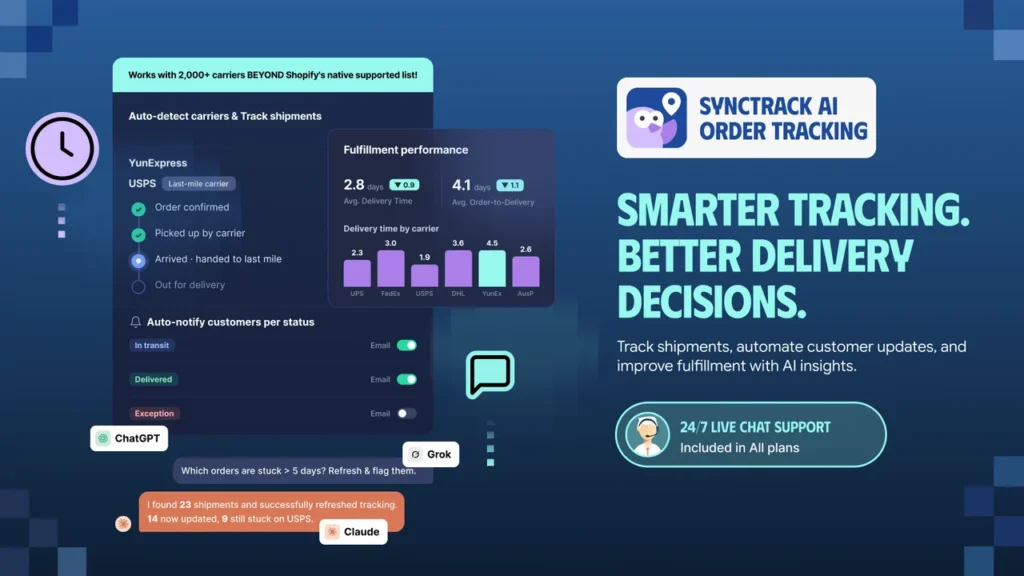
Synctrack Order Tracking helps make this part of peak season easier to manage. Its branded tracking page gives customers one place to look up their orders, view real-time shipment updates, and check estimated delivery dates. This gives shoppers the visibility they need without requiring your support team to manually answer every tracking question.
But Synctrack does more than provide a customer-facing tracking page. Merchants can also use:
By combining a branded tracking experience with real-time tracking insights and automation, Synctrack helps merchants reduce WISMO tickets and manage the customer communication challenges that come with peak shipping season. Even when delays are difficult to avoid, keeping customers informed can make the delivery experience far more predictable.
A peak season surcharge is an extra fee carriers charge when shipping demand spikes, usually around the holidays. During peak shipping season, these fees may apply to residential deliveries, oversized packages, or high-volume shipments.
It depends on the carrier, service, package size, and shipping volume. Some surcharges may be less than $1 per package, while oversized or special-handling shipments can cost much more. Check the carrier’s current peak-season pricing before setting your holiday shipping budget.
There is no single cutoff date. The deadline depends on the carrier and service you choose. Ground services usually need to be shipped earlier, while express options may accept packages much closer to Christmas. Always check the latest holiday shipping calendar before promising a delivery date.
For most carriers, peak shipping season starts to slow down after Christmas, but it may not end immediately. Higher demand, returns, and temporary surcharges can continue into January, depending on the carrier.
Peak shipping season isn’t one date on the calendar. It’s a set of overlapping rushes that hit different parts of the world at different times. Knowing when peak shipping season happens for your specific supply chain and planning months ahead instead of weeks ahead is the best way to avoid high rates, tight capacity, and long delays. The businesses and shoppers who plan early are almost always the ones who get through the busiest months with the fewest surprises.