Most dropshippers treat their dropshipping return policy as a box to tick, then wonder why shoppers leave before buying. But 93% of consumers check a store’s return policy before they order, and 82% say easy return options influence their decision to buy from a new brand. When you don’t hold inventory and your supplier sits overseas, one weak clause can cost you the sale, the refund, and the product. Here’s how to build a policy that protects your margins and turns hesitant browsers into buyers.
Contents
In regular ecommerce, a return is simple. The customer mails the item back. You get it, check it, and refund it. You control the warehouse, the check, and the timing.
Dropshipping breaks that chain in 3 spots.
You may never touch the product. In most dropshipping stores, the supplier ships straight to your customer. So when an item comes back, it goes to the supplier’s warehouse, if they accept returns, or to an address you set up. And if your supplier is overseas, which is common with AliExpress, mailing a $20 item back to China costs more than the item is worth.
Supplier rules are all different. Some accept full returns within 30 days. Others only take back broken items. Many AliExpress suppliers won’t accept returns for a simple change of mind. Promise a 30-day, no-questions-asked policy without checking first, and you pay for that gap yourself.
Never mention your supplier. Customers don’t care how your supply chain works. They bought from your brand, so their return starts and ends with you. Skip phrases like “the supplier” or “our fulfillment partner.” Just tell the customer what to do, and handle the rest behind the scenes.
These 3 differences shape every choice in your policy: you hold no stock, you depend on suppliers, and your brand takes the blame.
A return policy isn’t a cost. It’s what turns browsers into buyers, and it protects you when an order goes wrong.
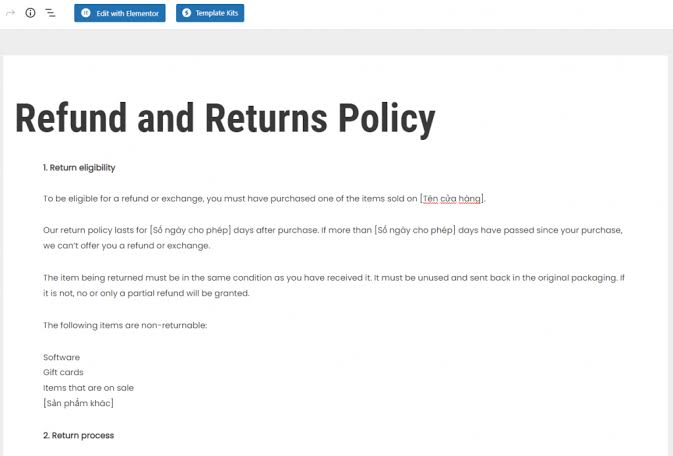
It reduces hesitation. 93% of shoppers check return policies before buying. A clear, fair, easy-to-find policy calms first-time buyer nerves, especially when they don’t know your brand yet.
It prevents disputes. A clear, published policy is one of your strongest pieces of evidence in a chargeback. If a customer disputes a charge, it can help show what terms were available before they.
Returns also affect whether customers come back. Route found that 97% of consumers are more likely to buy again after a positive return experience. Handle a return well, and you earn more trust than with a perfect sale, because it shows your brand stands behind its products. And 23% of shoppers who get an instant refund buy again soon.
It gives you data. Every return is feedback. Track return reasons by product and supplier, and you’ll spot bad descriptions, low-quality suppliers, and high-return customers. Then fix them, one by one.
A thoughtful policy, honest, clear, and built around exchanges and store credit, beats a copy-paste one every time. In dropshipping, where margins are thin, that edge adds up.
This is the most important step in the whole process, and most merchants skip it.
Before you list a single product, contact each supplier and write down the answers to these questions:
Once you have these answers, sort your products into three groups:
| Supplier Return Policy | Your Store Policy |
| Supplier accepts full returns (30 days) | Match or beat the supplier’s window (for example, 30 days) |
| Supplier accepts defective items only | Accept defects and damage; offer a returnless refund for other cases |
| Supplier accepts no returns | No change-of-mind returns where the law allows; EU/UK buyers still get 14 days |
The rule is simple: your customer-facing policy should never promise more than your supplier will honor, unless you’re ready to pay the difference yourself. For a lot of dropshippers, covering that gap by offering returnless refunds on cheap items is actually the smart financial move.
There are 3 return models that work for dropshipping. The right one depends on your price range, how flexible your supplier is, and what stage your business is at.

For products above $75 to $100, a normal return flow makes sense. The customer contacts you, you approve the return, they ship the item to your supplier’s warehouse or a domestic address, and the supplier refunds you after checking it.
This works for high-margin products where getting the item back is worth the shipping. It’s standard for furniture, large electronics, and high-end accessories.
For products under $30 to $40, processing a return often costs more than the item is worth. The smart move here is a returnless refund: you refund the customer and tell them to keep or donate the item.
Here’s a quick way to decide:
| Net Recovery = (Resale Value − Refurbishment Cost) − (Return Shipping + Labor) |
If that number is negative, getting the item back costs more than you’d earn reselling it, so a returnless refund saves you money.
This works best when an item arrives broken and can’t be resold anyway. A shopper with a broken product wants it fixed, not a shipping label. A fast refund or replacement closes the issue with zero logistics for you.
For defective items, offer a replacement before a refund. If a customer says their item arrived broken, ask for a photo, confirm the issue, and ship a new one. This solves the problem with no return, spares the customer a 7-to-14-day refund wait, and gets accepted often because they wanted the product, not their money back.
Many suppliers, including most POD providers, will replace a documented defect if you report it within their claim window. Send clear proof of the issue, such as a photo or video, and follow the supplier’s required process. If the claim is approved, they may ship a replacement without charging you for the defective item. The customer gets a new item, you pay nothing extra, and the supplier covers the defect.
A great dropshipping return policy isn’t the longest or the most legal-sounding one. It’s the one a customer can read in under 2 minutes and understand exactly what happens if they need to send something back.
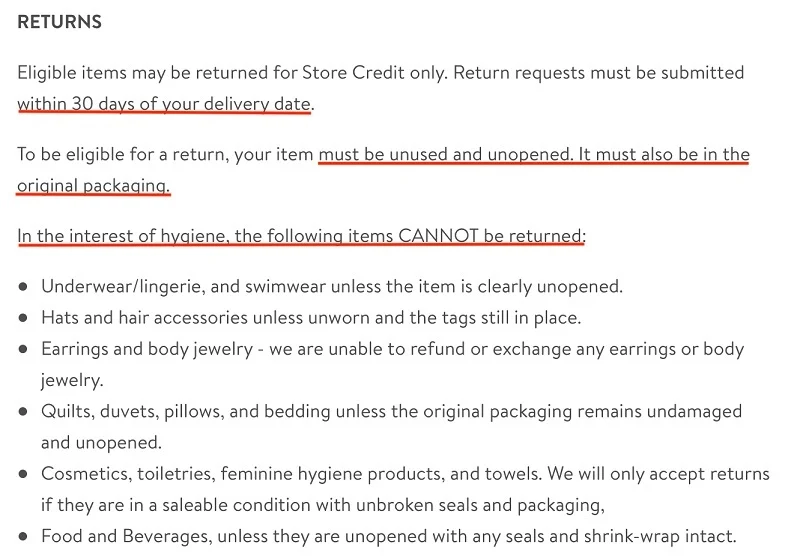
Every return policy should answer 7 questions:
A refund ends the relationship. An exchange keeps it going. That difference is worth real money.
Store credit can also help keep the sale relationship open. Instead of sending money out of the business immediately, you give the customer value they can use on a future order. If the customer still likes the product category, this can encourage them to come back and choose another item. Just make sure store credit is optional where required, clearly explained, and not used to avoid refunds that the customer is legally entitled to receive.
For dropshippers, exchanges have another big win: they often skip the physical return. If a customer got the wrong size, place a new order for the right one and let your supplier ship it, while the original stays put. That’s faster and cheaper than a round-trip return.
Here are suggestions to build exchanges into your flow:
A return policy customers can’t find might as well not exist. Many shoppers check the return policy before they buy, but only if they can find it. Your policy should be visible anywhere a buying decision happens: product pages, cart, checkout, order confirmation emails, and the footer.
Here’s where it belongs:
On product pages, you don’t need the full policy. A one-line summary like “30-day returns on all orders. [View our return policy →]” does the job. It tells shoppers the policy exists and links to the full version for anyone who wants the details.
Writing a return policy from scratch takes time and is easy to get wrong. Miss one key clause, like who pays return shipping or how long refunds take, and that gap turns into support tickets and payment disputes.
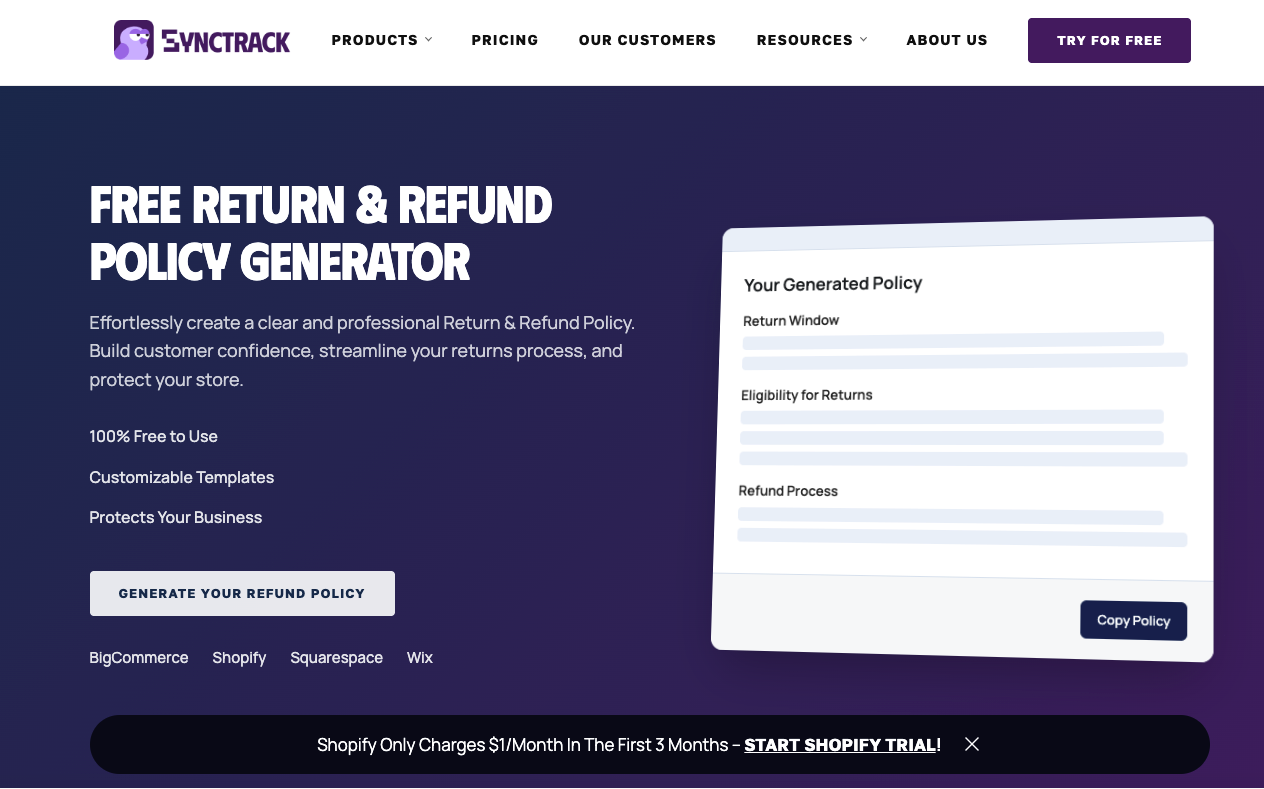
Synctrack’s free Return & Refund Policy Generator Tool handles this in three steps:
The tool covers four key areas that protect your business: your return window, product conditions, refund and exchange options, and non-returnable items. It’s 100% free, needs no account, and works with Shopify, Wix, Squarespace, and BigCommerce.
For dropshippers, a generated policy removes the risk of writing terms that are accidentally too generous (promising more than your supplier allows) or too strict (scaring customers off before they buy).
Q4 is when a weak dropshipping return policy starts to show its cracks. Holiday traffic is expected to grow again this year. Reuters reported that Adobe Analytics forecasts U.S. online holiday sales to grow 6.7% in 2026, reaching $275.1 billion from November to December. More orders usually mean more gift returns, late-delivery complaints, damaged-item claims, wrong-size requests, and support tickets from customers who need answers fast.
Before Black Friday, Cyber Monday, Christmas, and New Year sales begin, review the parts of your policy that affect peak-season orders most.
Extend or clarify your holiday return window. If customers buy gifts in November but give them in late December, a normal 14-day or 30-day window may feel too short. If your supplier rules and local laws allow it, add a holiday return window for eligible items.
Set clear delivery cutoff dates. Tell customers the last day to order for expected holiday delivery by region and product type. This is especially important when your supplier ships from overseas.
Separate gift returns from normal returns. Gift recipients may not have the order email, payment details, or buyer account. Decide whether they can receive store credit, exchange the item, or ask the original buyer to start the return.
Check supplier claim windows. Some suppliers only accept damaged or defective item claims within a short period after delivery. During the holidays, customers may report issues later because the item was bought as a gift. Make the claim window clear in your policy.
Prepare for shipping delays. Peak season brings carrier backlogs, weather delays, and customs slowdowns. Explain when customers should contact support, when you will open a carrier case, and when a late order may qualify for a replacement, refund, or store credit.
Make return shipping costs visible. If customers pay return shipping for change-of-mind returns, say it before checkout. Hidden return costs can turn a normal return into a complaint or payment dispute.
If you sell to EU shoppers, add one more compliance check.Directive (EU) 2023/2673 adds an online withdrawal function for consumer contracts made through an online interface. In simple terms, EU shoppers must be able to use their withdrawal right through a clear online flow, not be pushed into emailing support or searching for a hidden form.
For Shopify merchants, Synctrack Returns & Exchanges supports this with its EU Withdrawal form feature. EU shoppers can submit a withdrawal request through the return portal without being forced to give a reason, while non-EU orders can keep using the store’s normal return flow.
The cheapest return is the one that never happens. Most avoidable returns in dropshipping come from four causes, and you control all four.
Weak product descriptions. When a customer expects one thing and gets another, that’s a “not as described” return, and it’s on you. Use specific descriptions with real measurements, true colors, and device-compatibility notes for electronics. That clears up most of these returns.
Poor photos. One front-facing photo isn’t enough. Show multiple angles, lifestyle shots for scale, and close-ups of materials. A realistic preview cuts down “not what I expected” returns.
No size guidance. Apparel and footwear returns are mostly fit problems. A sizing table with real measurements, not just “S, M, L,” cuts fit returns by about 30%. If your supplier won’t share measurements, get them from the manufacturer or measure the product yourself.
Vague shipping timelines. Long shipping times make customers forget they ordered or lose interest. Set honest delivery dates at checkout, send tracking updates, and follow up on delivery. That stops the “I don’t want it anymore” returns.
In dropshipping, where margins are thin and every customer counts, your dropshipping return policy is quietly one of your biggest levers. A clear, fair policy calms buyer nerves, prevents chargebacks, and turns one-time shoppers into repeat customers. A messy one costs you sales you never see. You now have the steps, the models, and a free generator to build one that works. Don’t leave it as a copy-paste afterthought – make it a system that protects your store and grows your revenue.