Print-on-demand (POD) and custom product brands face a unique operational vulnerability: the timeline between order placement, custom manufacturing, and eventual carrier handoff is a breeding ground for extreme customer anxiety. Without proactive communication, customer support channels can quickly become overwhelmed. Printik, an enterprise-level custom product brand, completely flipped the script. By embedding automated tracking data into their workflow via a direct API integration with Synctrack Order Tracking, they transformed the critical post-purchase waiting window into a seamless, trust-building asset.
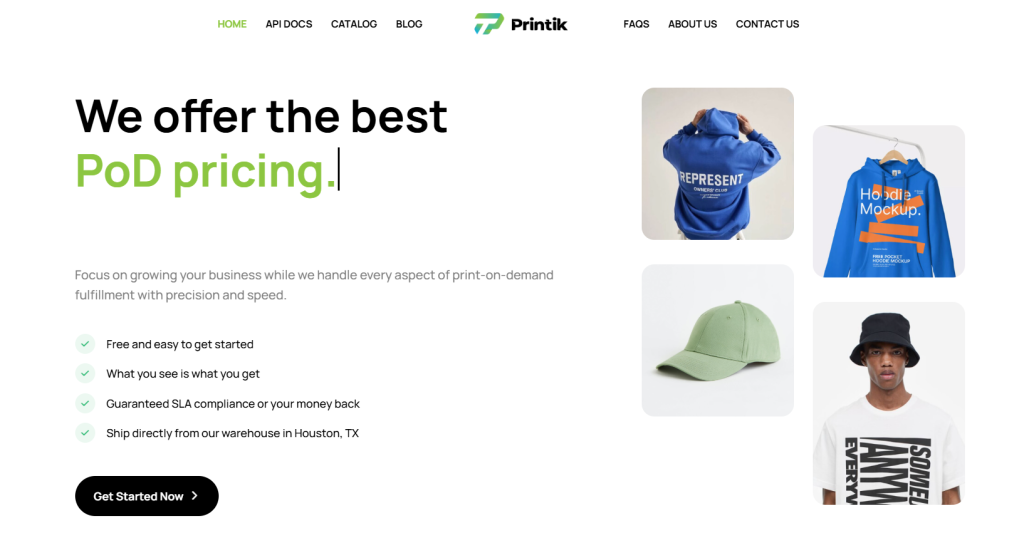
Industry & Business Model: High-volume Print-on-Demand (POD) custom products engineered for the United States (primary) and United Kingdom markets.
Integration Ecosystem: Operating as a scaled enterprise layout, Printik utilizes a robust API tracking integration rather than a standard plug-and-play storefront app.
The Infrastructure Imperative: Shipping customized goods across a complex, multi-warehouse network means tracking data must be fast, accurate, and consolidated to prevent cross-border friction and buyer remorse.
Operating a massive domestic and international print-on-demand network presents unique logistical hurdles that traditional e-commerce stores rarely encounter:
Multi-Carrier Operational Chaos: Printik routes orders through a highly concentrated mix of domestic carriers, including USPS, UPS, Amazon Multi-Channel Fulfillment (MCF) warehousing, and regional networks like FedEx and Amazon UK. Managing these disparate data streams without a centralized analytics layer threatens visibility.
The Post-Purchase Issue: Custom manufacturing timelines require extended transit cycles. If tracking information remains stagnant or disconnected, “Where Is My Order?” (WISMO) support ticket volumes inevitably surge.
Extreme Batch Volatility: Running large marketing campaigns can result in sudden, massive order surges. Processing over 1,400 shipments in a single day creates an immediate risk of support bottlenecks if the tracking infrastructure cannot scale instantly.
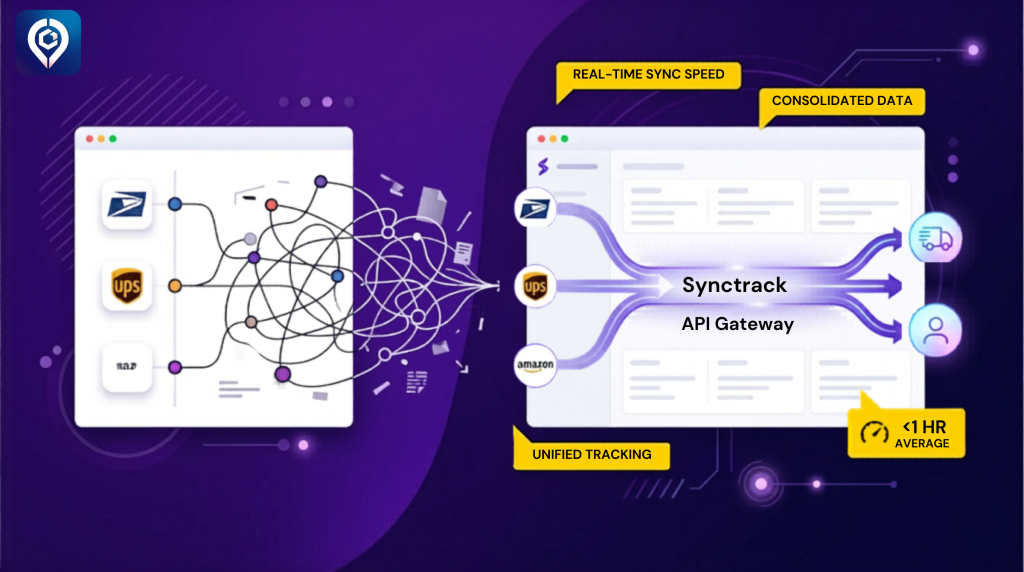
To future-proof their fulfillment pipeline against massive volume fluctuations, Printik deployed a direct tracking integration using the Synctrack API:
Unified API-Driven Architecture: Instead of forcing customers to navigate external carrier websites, Printik uses a centralized setup to pull multi-carrier data directly into their native tracking interface, keeping the post-purchase journey cohesive.
Ultra-Fast Tracking Refresh Rates: By automating transit checkpoints, the system achieves an average tracking update time of approximately 1 hour, completely erasing the data dead zones common in cross-border logistics.
Enterprise Milestone Transparency: Automated synchronization keeps customers informed at every critical milestone – from the initial creation of the shipping label to final domestic delivery.
Over a 6-month active window from late 2025 through early 2026, the data highlights the operational efficiency of Printik’s automated tracking infrastructure:
“With custom products and a complex carrier mix spanning USPS, UPS, and Amazon MCF, keeping our tracking details aligned was a massive technical hurdle. Moving to the Synctrack API changed everything. When our marketing campaigns triggered a sudden flash spike of over 1,400 orders in a single day, the infrastructure didn’t flinch. Our tracking updates sync roughly every hour, completely eliminating WISMO anxiety and protecting our reputation in the US market.”