When a customer doesn’t want what they ordered, they usually pick one of two paths. They either return the item for a refund or they exchange it for something else. On the surface, both look like the same thing: a way to fix an unhappy purchase. But they don’t end the same way at all.
A return reverses the sale. An exchange keeps it. That one difference is bigger than it sounds. If you process hundreds of post-purchase requests a month, moving even a small share of refunds toward exchanges can mean tens of thousands of dollars back in your pocket – and you don’t have to win a single new customer to get it.
So let’s break this down. We’ll cover what each option really means, how they work behind the scenes, where each one helps or hurts, and how smart merchants are building policies that lean toward exchanges to protect both their revenue and their customer relationships.
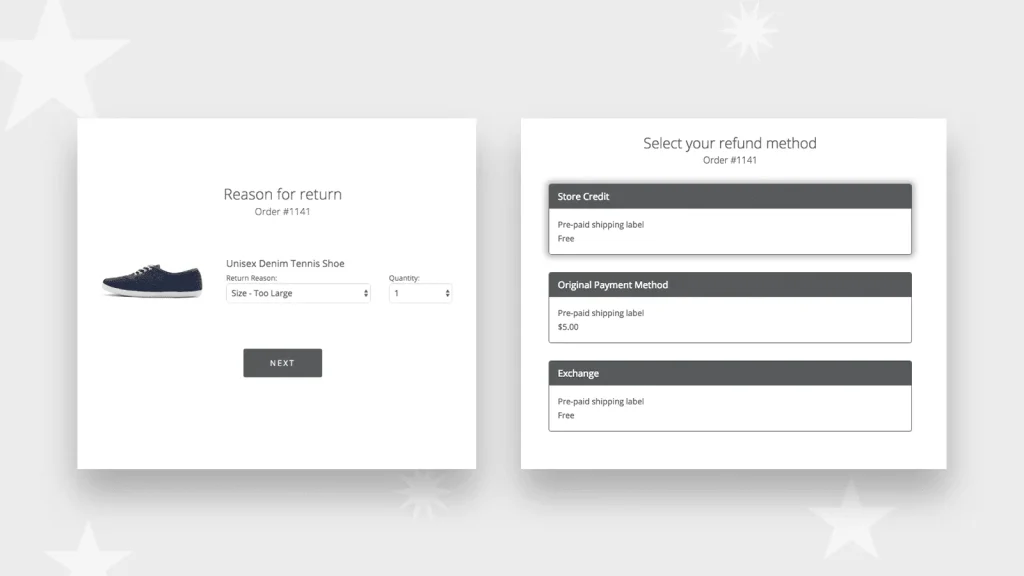
A return, sometimes called a refund, is when a customer sends a product back and gets their money back. The deal basically gets undone. The customer’s payment goes back to their card or comes back as store credit, and you get the item back to restock, refurbish, or toss.
Returns are a big part of online trust. Sometimes they’re even the law. In the European Union, the Consumer Rights Directive gives shoppers a 14-day window to return any online purchase for any reason at all. In places without rules like that, your own policy decides whether someone can return something and how.
Here’s the hard part. A return is a straight-up loss for you. The money leaves the business, and that’s not the end of it. Processing, shipping, inspecting, and marking down returned goods can eat up 20% to 60% of the item’s original value. So a $60 product might cost you another $12 to $36 on top of the refund. There’s also the risk of losing the person entirely – studies show 85% to 92% of customers won’t come back to a brand after a bad returns experience.
Even so, you can’t skip returns. They calm purchase nerves, especially on pricey or risky buys, and a clear, generous return policy actually helps you sell more. About 67% of shoppers check the return policy before they buy, and 52% have walked away from a cart because they didn’t like what they saw.
>>> How To Create Shopify Return Policy (+ Free Generate Tools)
An exchange is when a customer sends an item back and gets a different one from you instead. Maybe they swap a small shirt for a medium, pick a different color of the same shoe, or trade a broken unit for one that works. Sometimes they grab a completely different product that costs the same or more.
The key money difference is simple: an exchange keeps the sale. The original revenue stays put. Instead of handing back cash, you ship a replacement. That makes exchanges the better business outcome by default – but only if the process is smooth enough that customers actually want to use it.
There’s a relationship angle, too. Someone who chooses an exchange is still on your side. They want a product from you; they just don’t want the exact one they got. That mindset makes them far more likely to buy again. In fact, customers who exchange instead of refund have 2.5 times the lifetime value of those who take the cash and go.
Both options answer the same complaint – a customer who isn’t happy with what showed up. But they split apart on almost everything that matters to your bottom line.
| Dimension | Return (Refund) | Exchange |
| Revenue outcome | Money is lost | Money stays in the business |
| Customer mindset | Checked out; may not buy again | Still in; wants a product |
| Financial impact | Net loss (refund + processing) | Managed cost (shipping + handling) |
| Operational steps | Fewer (receive → inspect → refund) | More (check stock → hold → ship swap) |
| Upsell chance | None | The customer may pick a pricier item |
| Inventory need | Restock or write off | Replacement must be in stock |
| Lifetime value | Negative or flat | Positive – 2.5× higher |
| Best for | Defects, no good replacement | Sizing, color, and small mismatch |
The sheer size of this problem is why the choice matters so much.
In 2025, the National Retail Federation found that about 19.3% of all online sales were returned. That’s nearly $850 billion worth of products coming back. And online stores see returns at roughly twice the rate of physical shops – about 20% online versus 8.89% in stores.
The regional numbers make the point even clearer. A 2025 study by Loop Returns looked at 13.8 million returns from over 4,000 Shopify merchants in the UK, US, Australia, New Zealand, and Europe. It found a big gap in how often merchants turn returns into exchanges:
| Region | Return Rate | Exchange Rate | Revenue Kept via Exchanges |
| United Kingdom | 17.5% | 5.8% (lowest) | 21.9% |
| United States | 11.0% | 17.1% | 23.9% |
| Australia | 10.9% | 13.2% | 45.0% |
Look at that last column. Australian merchants keep twice as much revenue as UK ones. The reason isn’t that the customers – shoppers act about the same everywhere. The reason is how merchants set up their return process. UK stores that push refunds first lose far more money than stores that guide people toward exchanges.
Returns cost money, but they earn their place. Here’s why you can’t drop them.
They calm buying nerves. A good return policy works like a safety net. It helps shoppers click “buy” when they’d otherwise hesitate. This matters most for pricey items, clothes where sizing is a guess, and things people like to touch first. A generous policy doesn’t just help after the sale – it drives the sale.
They’re sometimes the law. In the EU, the 14-day return window isn’t optional. In the UK, you must refund faulty, broken, or wrongly described items, and customers sometimes have years to claim. Most major markets require full refunds on defective goods. Denying a return the law requires, and you’re inviting disputes.
They’re just the right call sometimes. A few cases clearly point to a refund instead of a swap:
But, for you, exchanges win almost every time they’re possible. Making them easy is one of the smartest moves in post-purchase operations. Here’s the payoff.
You keep the money. This is the big one. When a customer swaps instead of getting a refund, the sale stays in your business. Say you handle 500 returns a month at an $80 average order. Turning just 30% into exchanges saves $12,000 a month – and you spent nothing to earn it.
You keep the customer. Exchangers keep the transaction and the relationship. They carry 2.5 times the lifetime value of refund customers. A swap means they’re still committed. Make it smooth, and you get repeat buyers and bigger orders later.
You get a shot at an upsell. Someone in your returns portal is already shopping. Most merchants waste that moment. Show them the size they need in stock, plus a style they might like, and a service request becomes a sale. Customers who take store credit or trade up spend about 25% more than on their first order.
You spot your loyal customers. A person who chooses an exchange wants to stay. They like what you sell – they just need the right version. That makes them great picks for loyalty programs and follow-up emails, far better than refunded customers who may never return.
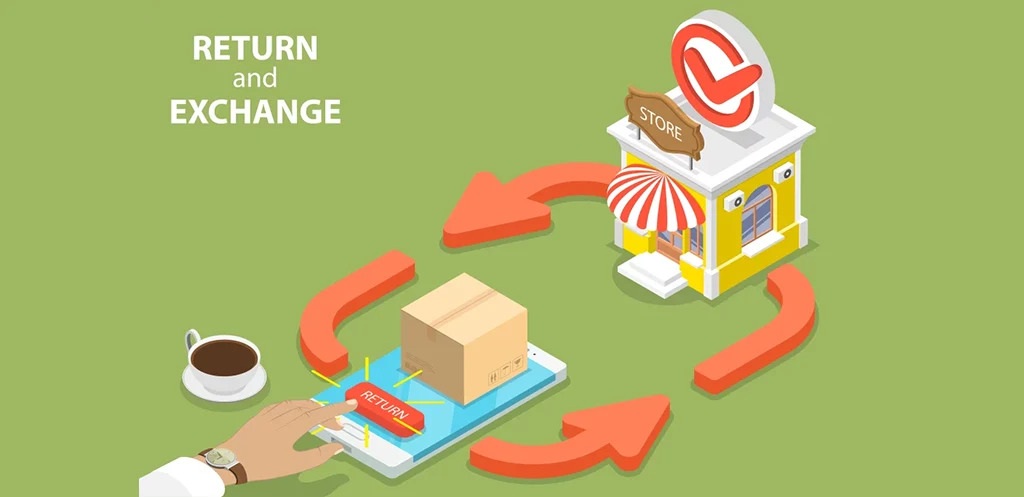
Neither path is perfect. Know the limits of both before you set your policy.
Where returns fall short:
Where exchanges fall short:
The right call depends on the return reason, the product, and your relationship with the customer. Here’s a simple framework.
Offer a refund when:
Offer an exchange when:
You’ve read the whole return vs exchange playbook by now – exchange-first flows, store credit, real-time stock, smart rules. It all sounds great on paper. And the biggest shift behind all of it is simple: move from a refund-first flow to an exchange-first flow.
Think about how most brands work today. The customer starts a return, the first button says “Request Refund,” they click it, and the money’s gone – not because they wanted a refund, but because that’s what the system showed them first. The exchange-first way flips that. Before the refund button ever appears, the customer sees “Want a different size?” or “Here are some products you might like instead.” Stock shows in real time, and maybe there’s a small nudge too – free return shipping, a 10% bonus credit, or a discount on the swap. The refund is still there. It’s just not the default anymore.
But it’s more than moving a button around. To pull it off, you need real infrastructure working behind the scenes:
And here’s the catch. None of this works if you’re doing it by hand. Chasing return requests through email, writing shipping labels one at a time, and deciding refund-or-swap on every single order eats up hours you don’t have. Worse, every clunky step pushes the customer back toward the one outcome you’re trying to avoid – a full cash refund. The system you built to save revenue quietly leaks it, one slow ticket at a time.
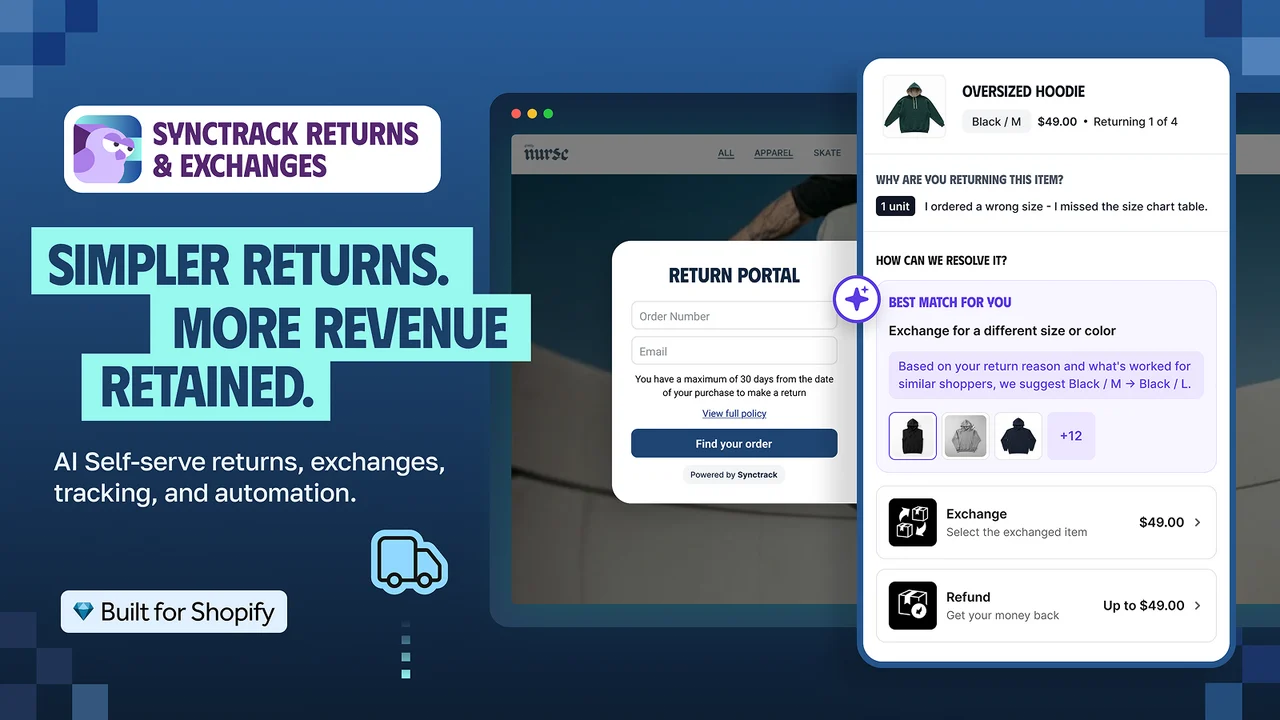
That’s exactly the gap Synctrack Returns & Exchanges fills. This is a Shopify app that runs the entire returns and exchanges process for you, so the exchange-first flow from this guide becomes the default instead of a wish. Here’s how it maps to what you just read:
The payoff lines up with the numbers throughout this article: less time spent on approvals and labels, fewer straight refunds because swaps and credit are front and center, and a smoother experience that keeps customers coming back.
If returns are quietly draining your revenue, this is the tool that turns them into a retention win instead.
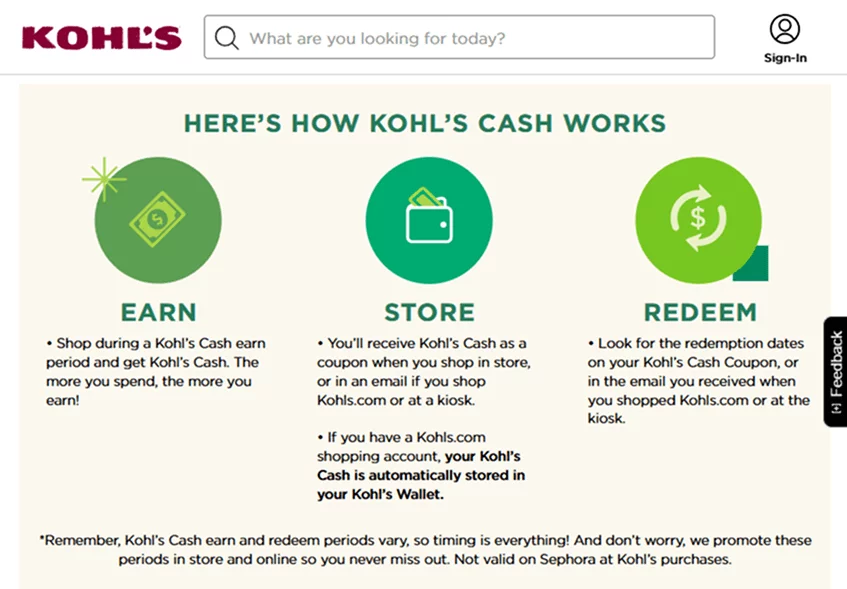
Between a cash refund and a product swap sits a third option: store credit. Merchants lean on it when they want to keep the revenue without making the customer pick a replacement right away.
Store credit keeps the money in your world. The customer keeps their buying power; you keep the cash. And credit acts like a pending balance – they’re inclined to come back and spend.
Three tactics make it work better:
That 23-million-return study found that the returns process is a massive, hidden retention lever. Brands that give shoppers three flexible choices – swap for a different version, take store credit, or get a full refund – keep significantly more revenue and drive higher repeat purchase rates than brands with only one option.
The return vs exchange choice comes down to one thing: losing a sale or keeping a customer. Since winning a new customer costs five to seven times more than keeping one, every exchange, instead of a refund, pays off well beyond that single saved sale.
So the path is clear. Build exchange-first flows, offer more than one option, spell out your policy before people buy, and use return data to fix root causes. Treat every return as a chance to keep a customer – not just close a ticket.